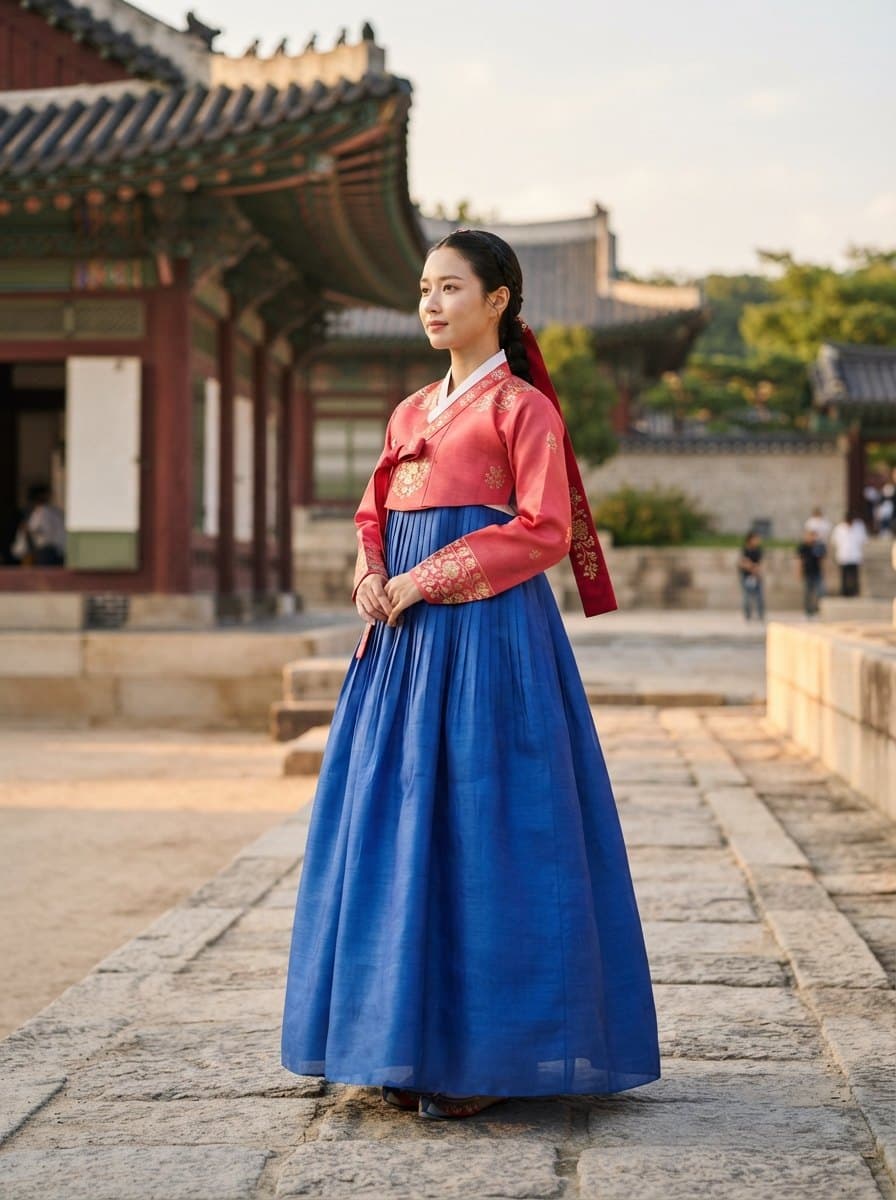
Traditional Korean Dress Costume
Embrace the timeless elegance and vibrant colors of the traditional Korean Hanbok.
The Hanbok is the traditional attire of Korea, worn for celebrations, weddings, and festivals. Known for its vibrant colors, clean lines, and elegant silhouette, it features a short jacket paired with a voluminous skirt for women or loose trousers for men. Wearing one is a beautiful way to appreciate Korean heritage and culture.
- Difficulty
- Easy
- Time
- ~15 min
- Budget
- $40–150
Try it on
See yourself as Traditional Korean Dress
One clear photo of yourself; we render you in this costume — face untouched, full body, about 20 seconds.
One render, $1. No account needed — if it fails you're not charged. Pricing.
Your photo is sent to Google's Gemini API to make the render and isn't used for training. Renders are AI-generated and labelled.
Want a different costume on this photo, or a whole group in costume? Open the Try-On Studio.
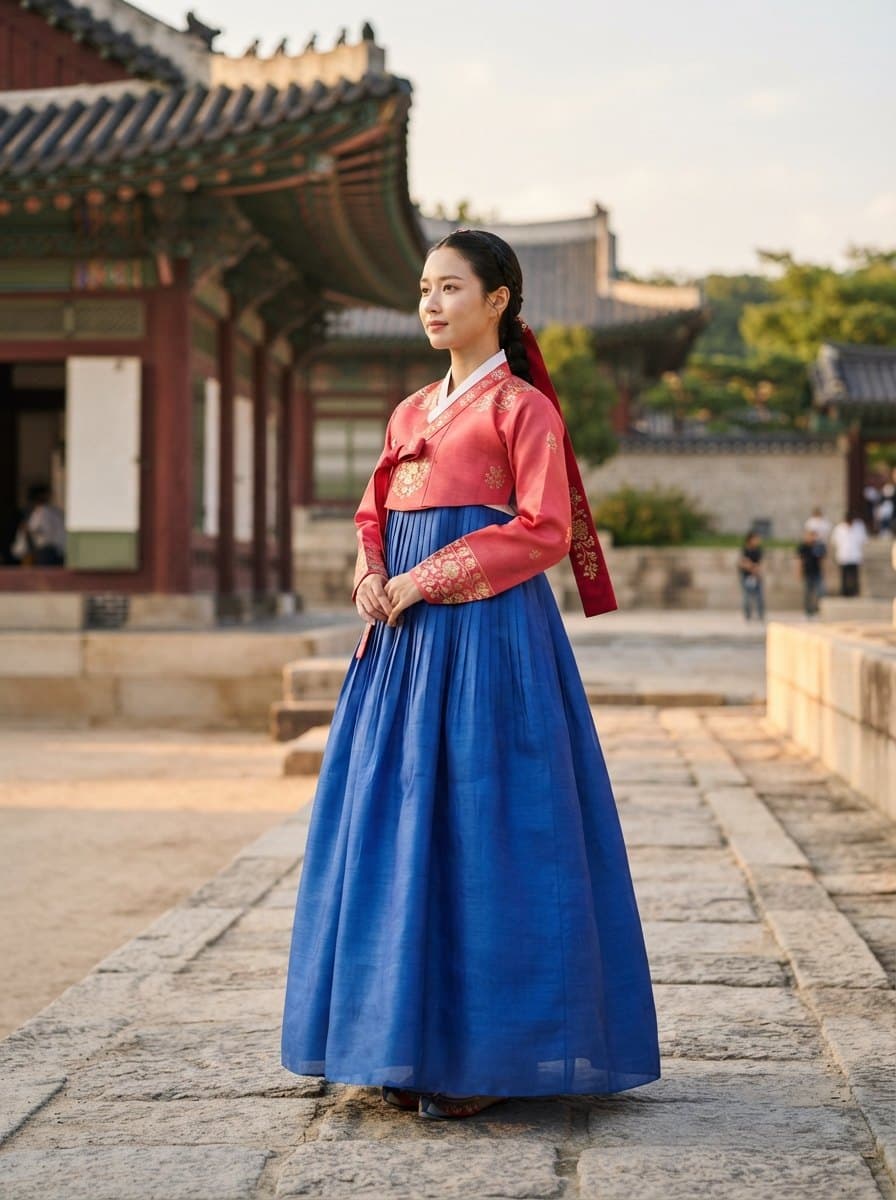
What you need for a Traditional Korean Dress costume
Short on time? Buy it ready-made
Spirit Halloween sells the complete Traditional Korean Dress costume — one box instead of 5 pieces.
Jeogori (Jacket)
A cropped, long-sleeved jacket that wraps across the chest, featuring a white collar strip (dongjeong) and long fabric ties (otgoreum).
DIY: Use a short wrap cardigan or wrap top with wide sleeves, adding a stiff white fabric band to the collar.
Chima (Skirt)
A high-waisted, floor-length wrap skirt with a voluminous, pleated silhouette, typically made of satin or organza.
DIY: Wear a high-waisted, pleated maxi skirt over a structured petticoat to mimic the full shape.
Sokchima (Petticoat)
A stiff, multi-layered underskirt worn beneath the chima to give the skirt its signature bell-shaped volume.
DIY: Use a standard bridal A-line petticoat or a stiff tulle underskirt.
Norigae (Pendant)
A traditional decorative tassel hung from the skirt's waistband or the jacket ties, featuring intricate knots and gemstones.
DIY: Craft a decorative pendant using colorful embroidery floss, beads, and a long tassel.
Traditional Hair Ribbon (Daenggi)
A long, wide red or gold-patterned ribbon tied at the end of a long braid.
DIY: Cut a strip of red satin ribbon and decorate the ends with gold fabric paint.
Rather not assemble it? See ready-made Traditional Korean Dress costumes at Spirit Halloween ↗
How to put it together
- 1
Put on the sokchima (petticoat) first to establish the volume of the skirt.
- 2
Wrap the chima (skirt) around your chest, just under the armpits, securing the straps tightly over your shoulders or around your chest.
- 3
Slip on the jeogori (jacket) and align the collar. Tie the otgoreum (front fabric ties) into a neat, single-loop bow on the right side of the chest.
- 4
Attach the norigae tassel to the waistband of the chima so it drapes elegantly over the front of the skirt.
- 5
Style your hair into a neat low bun or a long single braid, securing the end with a decorative daenggi ribbon.
- 6
Finish the look with clean, simple flat shoes or traditional white socks (beoseon).
Makeup & hair
Keep makeup soft, natural, and dewy with a focus on clear skin, a soft pink or coral lip, and minimal eye makeup. Hair should be parted down the middle and pulled back into a sleek low bun (jjokjin meori) or a neat braid.
Traditional Korean Dress for couples, groups, kids & more
- couples
- Pair a women's chima and jeogori with a men's hanbok consisting of a baji (trousers), jeogori, and a long outer vest (baeja).
- group
- Have members wear hanboks in coordinating pastel or vibrant primary colors to represent a traditional family celebration.
- kids
- Children's hanboks are highly popular and feature bright, multi-colored striped sleeves (saekdongot) symbolizing good fortune.
- Plus size
- The high-waisted, wrap-around design of the chima is highly adjustable and naturally accommodating for all body types.
- pet
- Pet-sized hanbok dog coats with velcro closures are widely available for festive occasions.
Tips
- Ensure the otgoreum bow is tied correctly; the loop should point to your left, and the long tails should drape straight down.
- Avoid letting the skirt drag on the floor by adjusting the shoulder straps or wearing slight platform flats.
- Steam the silk or polyester fabric beforehand to remove creases, as wrinkles can detract from the clean lines of the silhouette.
Traditional Korean Dress costume FAQ
- Is it respectful for non-Koreans to wear a Hanbok?
- Yes, Koreans generally welcome and encourage foreigners to wear Hanbok respectfully, especially when visiting historical sites, palaces, or cultural festivals.
- What is the difference between a Hanbok and a Kimono?
- While both are traditional Asian garments, the Hanbok features a short jacket and a high-waisted, voluminous skirt or loose trousers, whereas the Japanese Kimono is a straight, T-shaped robe secured with a wide sash (obi).
- What do you wear under a Hanbok?
- Wear a lightweight, breathable t-shirt and leggings under the petticoat and skirt to stay comfortable and ensure the outer fabrics drape smoothly.
Did you know? The vibrant colors of traditional Hanboks were historically based on the five elements of Yin and Yang: blue (east), white (west), red (south), black (north), and yellow (center).