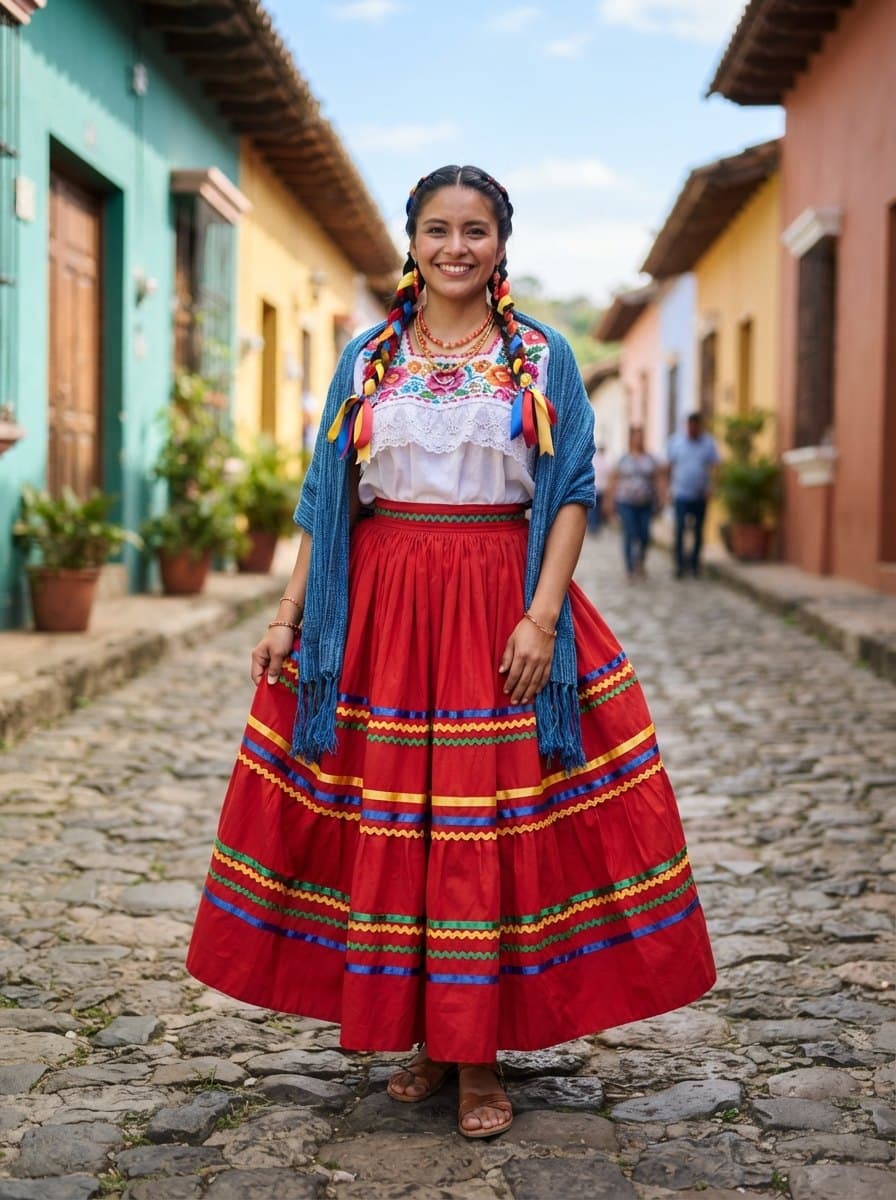
Traditional Salvadoran Dress Costume
Celebrate Salvadoran heritage with vibrant colors and beautiful traditional embroidery.
The traditional Salvadoran dress, or traje típico, is a beautiful celebration of El Salvador's rich cultural heritage. Frequently worn during Independence Day festivals and cultural events, this look typically features a white embroidered blouse, a flowing colorful skirt, and a woven shawl. It is a popular choice for cultural celebrations, folk dance performances, and heritage events.
- Difficulty
- Easy
- Time
- ~20 min
- Budget
- $35–120
Try it on
See yourself as Traditional Salvadoran Dress
One clear photo of yourself; we render you in this costume — face untouched, full body, about 20 seconds.
One render, $1. No account needed — if it fails you're not charged. Pricing.
Your photo is sent to Google's Gemini API to make the render and isn't used for training. Renders are AI-generated and labelled.
Want a different costume on this photo, or a whole group in costume? Open the Try-On Studio.
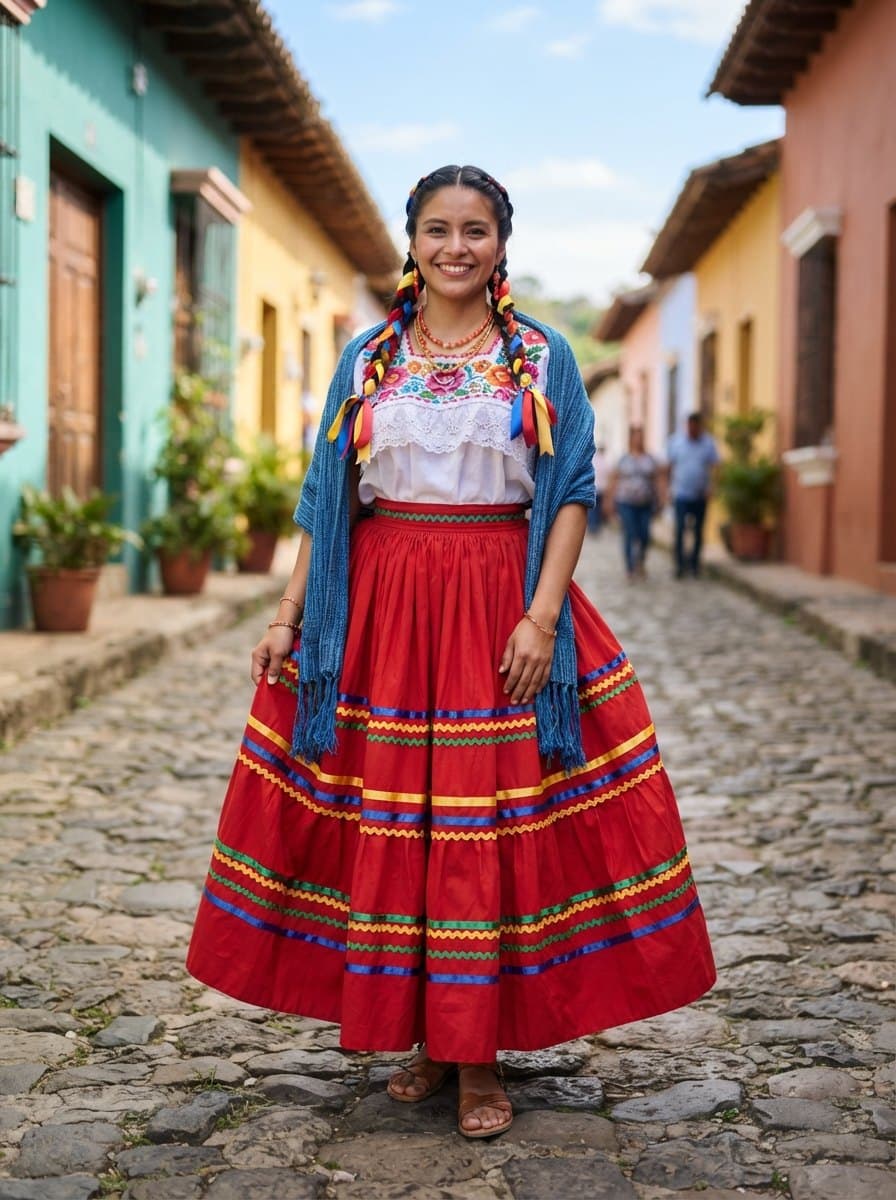
What you need for a Traditional Salvadoran Dress costume
Short on time? Buy it ready-made
Spirit Halloween sells the complete Traditional Salvadoran Dress costume — one box instead of 5 pieces.
White embroidered peasant blouse
A white cotton or manta fabric blouse featuring colorful floral embroidery around the neckline and short sleeves.
DIY: Use a plain white off-the-shoulder blouse and fabric markers or iron-on floral patches around the neckline.
Vibrant long maxi skirt
A full, flowing ankle-length skirt in a solid bright color like blue, red, or green, often decorated with horizontal satin ribbons near the hem.
DIY: Take a solid color maxi skirt and fabric-glue colorful satin ribbons horizontally around the bottom hem.
Woven shawl (Rebozo)
A long, fringed woven shawl in a contrasting bright color or striped pattern, draped over the shoulders or arms.
DIY: Use a long, colorful woven scarf with fringed ends.
Leather sandals
Simple flat leather sandals, huaraches, or neutral-colored flats.
DIY: Any simple brown or tan flat sandals will work perfectly.
Hair ribbons or flowers
Brightly colored satin ribbons to weave into braids, or silk flowers to pin into the hair.
DIY: Cut strips of colorful satin ribbon from a craft store to tie into your hair.
Rather not assemble it? See ready-made Traditional Salvadoran Dress costumes at Spirit Halloween ↗
How to put it together
- 1
Put on the white embroidered peasant blouse, adjusting it to sit comfortably on or slightly off the shoulders.
- 2
Step into the long, vibrant maxi skirt and secure it at the waist.
- 3
Drape the woven shawl (rebozo) symmetrically over your shoulders, or fold it and carry it draped over your forearms.
- 4
Style your hair into braids or a bun, securing it with colorful ribbons or pinning flowers near the temple.
- 5
Put on your flat leather sandals or huaraches.
- 6
Finish the look with gold-colored hoop or filigree earrings and a simple beaded necklace.
Makeup & hair
Style hair into two neat braids with colorful ribbons woven throughout, or pull it back into a low bun adorned with bright flowers. Keep makeup natural with a touch of warm blush and a classic red or pink lipstick.
Traditional Salvadoran Dress for couples, groups, kids & more
- couples
- Pair with a partner wearing a traditional male outfit: a white cotton shirt (cotón), white trousers, a red neckerchief (pañolón), a straw hat, and leather sandals.
- group
- Have group members wear matching embroidered blouses with skirts in different solid colors (such as blue, red, yellow, and green) to represent a traditional dance troupe.
- kids
- Children can wear a simplified version featuring a colorful ribbon-trimmed skirt and a matching white embroidered top.
- Plus size
- An elastic-waist maxi skirt and a loose-fitting peasant blouse offer an adjustable, comfortable, and authentic fit.
Tips
- Choose lightweight cotton fabrics for the blouse and skirt to stay cool during outdoor festivals or warm weather.
- If performing or dancing, secure the skirt waistband tightly and opt for secure flat shoes with good grip.
- For photos, hold the edges of the skirt out to the sides to showcase the full width, drape, and ribbon details.
- Look for authentic handmade pieces from Salvadoran artisans or cultural shops to support traditional craftsmanship.
Traditional Salvadoran Dress costume FAQ
- What is the traditional dress of El Salvador called?
- It is generally referred to as 'traje típico' (traditional suit/dress). Specific regional styles exist, such as the 'traje de Volcaneña' from the San Salvador volcano region or the 'Panchimala' style.
- When do people wear this traditional dress?
- It is worn during national holidays like Salvadoran Independence Day (September 15), patron saint festivals (such as the Fiestas Agostinas), and cultural dance performances.
- How do I style my hair for this costume?
- The most traditional style is braiding the hair into one or two braids with bright satin ribbons woven into the strands, or styling it into a bun decorated with fresh or silk flowers.
Did you know? The traditional 'Volcaneña' dress originates from the central volcanic region of El Salvador and is famously worn during the patron saint festivals of San Salvador in August.