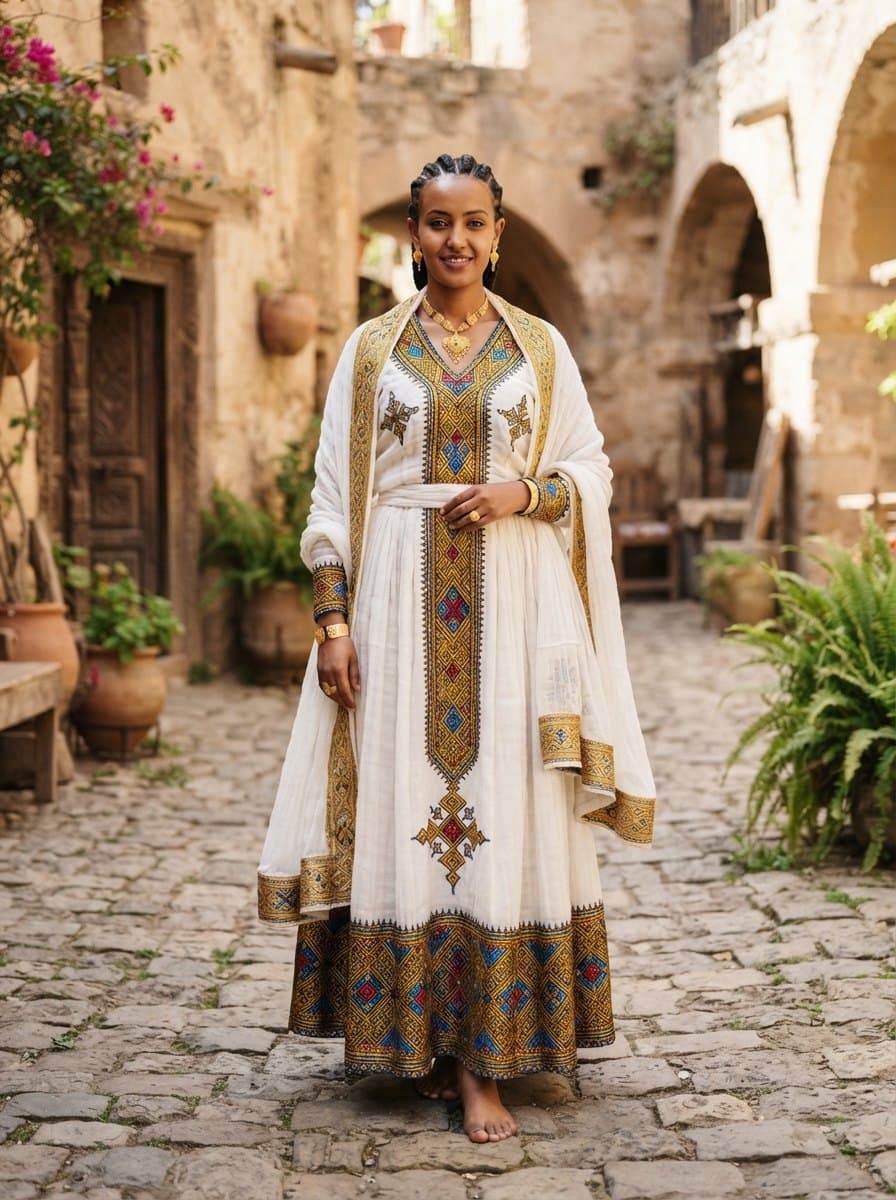
Ethiopian Traditional Dress Costume
Embrace the elegant, hand-woven beauty of Ethiopia's traditional Habesha Kemis.
The Habesha Kemis is the iconic traditional dress worn by Ethiopian and Eritrean women for weddings, holidays, and formal cultural events. Typically made of fine white cotton or chiffon, it features vibrant, hand-woven colorful borders (tilet) and is paired with a matching shawl called a netela. This costume guide helps you assemble or style this beautiful, culturally rich attire with respect and accuracy.
- Difficulty
- Easy
- Time
- ~15 min
- Budget
- $40–150
Try it on
See yourself as Ethiopian Traditional Dress
One clear photo of yourself; we render you in this costume — face untouched, full body, about 20 seconds.
One render, $1. No account needed — if it fails you're not charged. Pricing.
Your photo is sent to Google's Gemini API to make the render and isn't used for training. Renders are AI-generated and labelled.
Want a different costume on this photo, or a whole group in costume? Open the Try-On Studio.
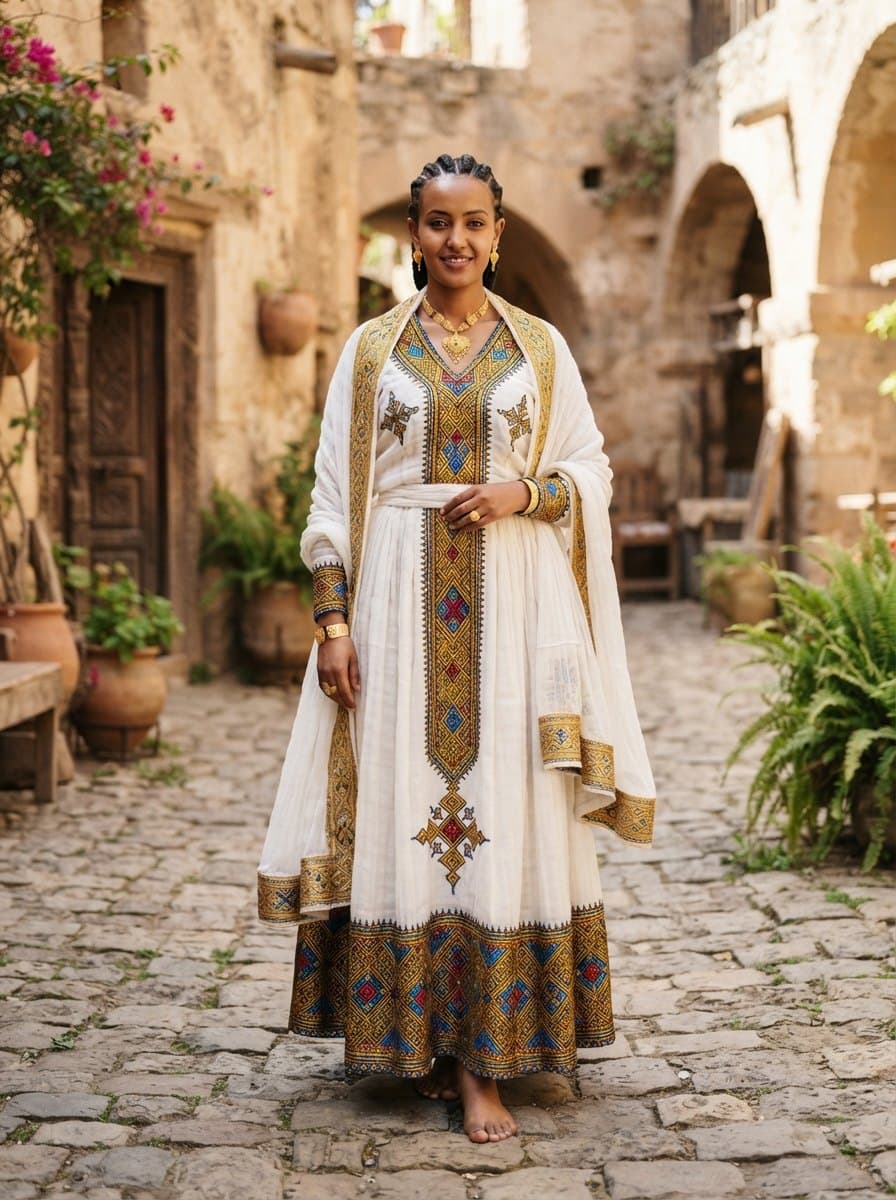
What you need for a Ethiopian Traditional Dress costume
Short on time? Buy it ready-made
Spirit Halloween sells the complete Ethiopian Traditional Dress costume — one box instead of 4 pieces.
Habesha Kemis (Traditional Dress)
An ankle-length, long-sleeved dress made of lightweight white cotton or chiffon, featuring colorful, intricate embroidered patterns (tilet) along the collar, cuffs, and hem.
DIY: Use a long-sleeved white maxi dress and fabric paint or iron-on decorative trim to create geometric patterns along the neckline, cuffs, and hem.
Netela (Matching Shawl)
A long, sheer white cotton scarf or shawl with embroidered borders that match the dress's decorative trim.
DIY: Decorate a long white cotton or chiffon scarf with matching fabric trim or paint on the ends.
Traditional Jewelry
Gold or brass jewelry, including a delicate headpiece, drop earrings, and a matching cross pendant necklace.
DIY: Use any delicate gold-toned filigree or cross jewelry you already own.
Footwear
Simple flat leather sandals or low gold heels that do not distract from the dress's ornate hem.
DIY: Wear neutral-colored flat sandals or slip-ons.
Rather not assemble it? See ready-made Ethiopian Traditional Dress costumes at Spirit Halloween ↗
How to put it together
- 1
Put on the ankle-length white Habesha Kemis, ensuring the embroidered collar and cuffs are aligned.
- 2
Drape the Netela shawl over your shoulders. For formal styling, drape one end over your left shoulder and let the other end hang down, or wrap it elegantly around your head and shoulders.
- 3
Put on the traditional gold-toned jewelry, starting with the cross necklace and matching earrings.
- 4
Style your hair in traditional braided patterns or a neat updo to showcase the dress's embroidered neckline.
- 5
Slip into simple gold or neutral flat sandals to complete the look.
Makeup & hair
Hair is traditionally styled in 'shuruba' (intricate cornrow braids pulled back from the face) or a elegant half-up style. Makeup should be natural and radiant, featuring warm tones, defined eyebrows, and a soft lip color.
Ethiopian Traditional Dress for couples, groups, kids & more
- couples
- Pair with a man wearing a traditional white Ethiopian Kaba (cape) or a white long-sleeved tunic (Jebeha) with matching embroidered trim.
- group
- Have group members wear Habesha dresses with different colored 'tilet' (embroidered borders) for a beautiful, coordinated display.
- kids
- A miniature version of the Habesha Kemis or a simple white tunic with colorful geometric trim for kids.
- Plus size
- The lightweight, flowing cotton fabric of the Habesha Kemis is naturally breezy and comfortable, often featuring an adjustable tie or elastic waist.
Tips
- Handle the dress with care, as authentic hand-woven cotton (shemma) is delicate and should be dry cleaned or gently hand washed.
- Ensure the Netela is draped gracefully; the embroidered ends should be visible at the front or draped over the shoulder.
- Wear light-colored or nude undergarments, as the white cotton or chiffon fabric can be slightly sheer under bright lights.
Ethiopian Traditional Dress costume FAQ
- What is the traditional Ethiopian dress called?
- The traditional dress worn by Ethiopian women is called a Habesha Kemis, which is typically accompanied by a matching shawl called a Netela.
- What material is a Habesha Kemis made of?
- It is traditionally made from hand-spun cotton fabric called shemma, though modern versions also use lightweight chiffon or polyester blends.
- How do you style the Netela shawl?
- The Netela is incredibly versatile. For general wear, drape it over the shoulders with the decorated borders showing. For church or formal respect, it can be draped over the head.
Did you know? The colorful embroidered patterns on the borders of the dress, known as 'tilet' or 'tilf', are traditionally hand-woven and can indicate the specific region or cultural heritage of the weaver.