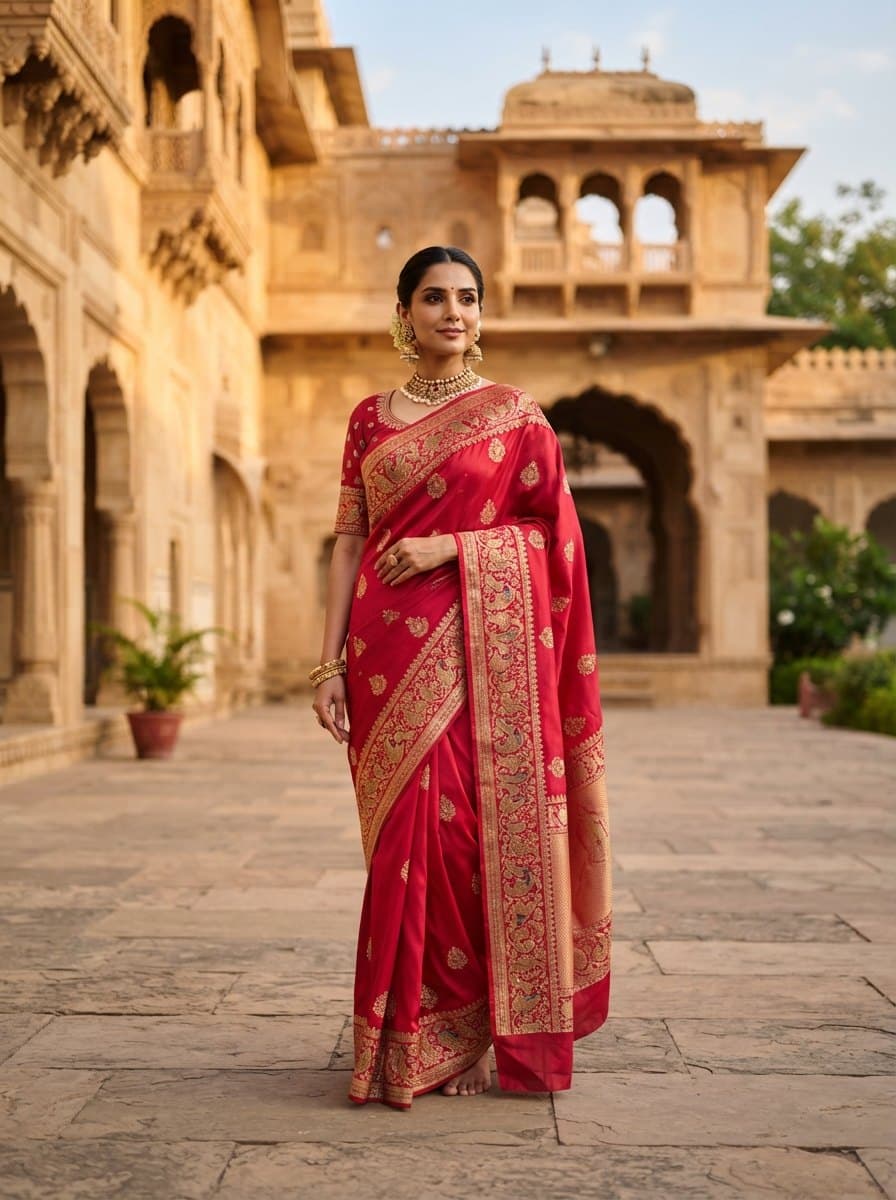
Traditional Indian Dress Costume
Celebrate India's rich heritage with elegant sarees and classic kurtas.
Traditional Indian attire is celebrated worldwide for its vibrant colors, intricate embroidery, and elegant silhouettes. Whether you choose a draped saree or a comfortable kurta set, this look is perfect for cultural festivals, weddings, and celebrations. The ensemble relies on rich fabrics, classic draping techniques, and traditional jewelry to complete the look.
- Difficulty
- Medium
- Time
- ~30 min
- Budget
- $40–150
Try it on
See yourself as Traditional Indian Dress
One clear photo of yourself; we render you in this costume — face untouched, full body, about 20 seconds.
One render, $1. No account needed — if it fails you're not charged. Pricing.
Your photo is sent to Google's Gemini API to make the render and isn't used for training. Renders are AI-generated and labelled.
Want a different costume on this photo, or a whole group in costume? Open the Try-On Studio.
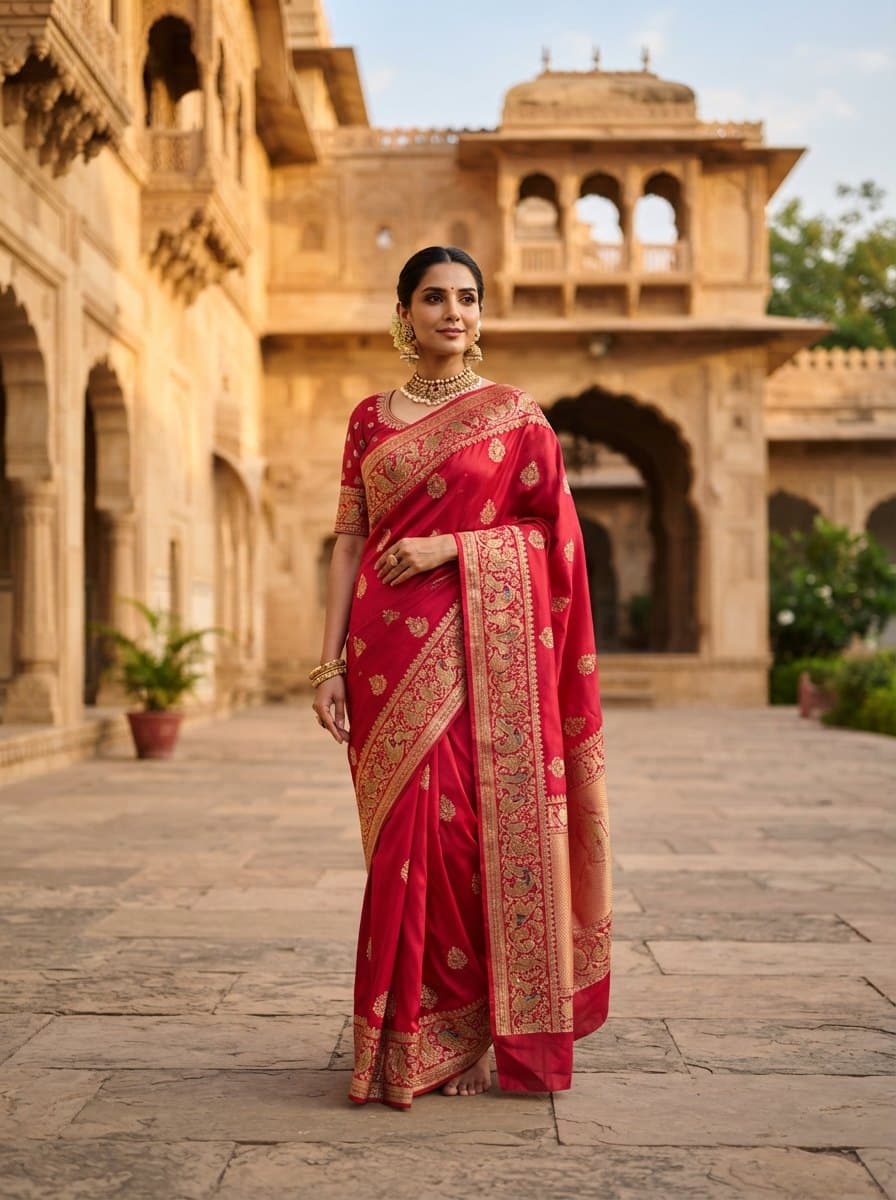
What you need for a Traditional Indian Dress costume
Short on time? Buy it ready-made
Spirit Halloween sells the complete Traditional Indian Dress costume — one box instead of 6 pieces.
Saree (Sari)
A 5-to-9 yard length of fabric, typically made of silk, georgette, or cotton, featuring decorative borders.
DIY: Use a long piece of lightweight, colorful fabric with a decorative trim pinned along the edge.
Choli (Blouse)
A cropped, fitted blouse worn under the saree, matching or complementing the saree's color.
DIY: Use a fitted crop top or short-sleeved t-shirt in a coordinating solid color.
Petticoat (Inskirt)
An adjustable drawstring waist underskirt used to anchor the saree pleats securely.
DIY: Wear a tight-fitting maxi skirt with a secure, non-slip waistband.
Kurta Set (Alternative)
A long tunic paired with loose-fitting trousers (pyjamas), ideal for a classic men's or unisex look.
DIY: Pair a long, collarless linen tunic with matching slim-fit trousers.
Jhumka Earrings
Traditional bell-shaped Indian earrings, often in gold or silver with bead accents.
Bangles
A set of colorful glass, metal, or silk-thread bangles worn on both wrists.
Rather not assemble it? See ready-made Traditional Indian Dress costumes at Spirit Halloween ↗
How to put it together
- 1
For a saree, put on the fitted choli blouse and the petticoat, tying the petticoat drawstring tightly at your waist.
- 2
Tuck the plain end of the saree fabric into the petticoat waistband, wrapping it once around your body from right to left.
- 3
Make 5 to 8 neat pleats with the fabric at the front, tucking them securely into the front center of the waistband.
- 4
Drape the remaining fabric (the pallu) diagonally across your chest and over your left shoulder, letting it hang down your back.
- 5
Secure the pallu to your blouse shoulder with a safety pin to keep it from slipping.
- 6
For a kurta look, simply wear the long tunic over the matching pyjama trousers.
- 7
Finish the outfit by putting on traditional footwear like juttis or sandals and adding jewelry.
Makeup & hair
Style hair in a neat low bun decorated with a faux jasmine flower garland (gajra), or leave it in soft waves. Add a small decorative bindi in the center of the forehead, and apply classic kohl eyeliner.
Traditional Indian Dress for couples, groups, kids & more
- couples
- One partner wears a vibrant silk saree while the other wears a coordinating sherwani or kurta pyjama set.
- group
- A colorful group showcase featuring different regional styles, such as Lehengas, Anarkalis, and Kurtas.
- kids
- Miniature lehenga cholis for girls and soft cotton kurta sets for boys.
- Plus size
- Anarkali suits offer a highly flattering, flared silhouette, while georgette sarees drape smoothly without adding bulk.
- pet
- A lightweight, decorative pet vest featuring gold embroidery or a faux brocade pattern.
Tips
- Use safety pins generously to secure the saree pleats and pallu so you can move and dance comfortably.
- Wear your heels or dress shoes before draping the saree to ensure you adjust the length perfectly to graze the floor.
- Opt for breathable cotton or georgette fabrics if you plan to wear the outfit in warm weather.
Traditional Indian Dress costume FAQ
- What is the difference between a saree and a lehenga?
- A saree is a single long piece of fabric draped around the body, while a lehenga is a three-piece outfit consisting of a long skirt, a cropped blouse (choli), and a scarf (dupatta).
- How do I keep a saree from falling off?
- The key is a tightly tied petticoat waistband and using safety pins to secure the front pleats and the shoulder drape (pallu) to your blouse.
- Can men wear traditional Indian clothing?
- Yes, men traditionally wear a kurta pyjama (a tunic and trousers set) or a sherwani (a structured, embroidered coat) for formal occasions.
Did you know? The saree is one of the oldest continuously worn garments in human history, dating back to the Indus Valley Civilization over 5,000 years ago.