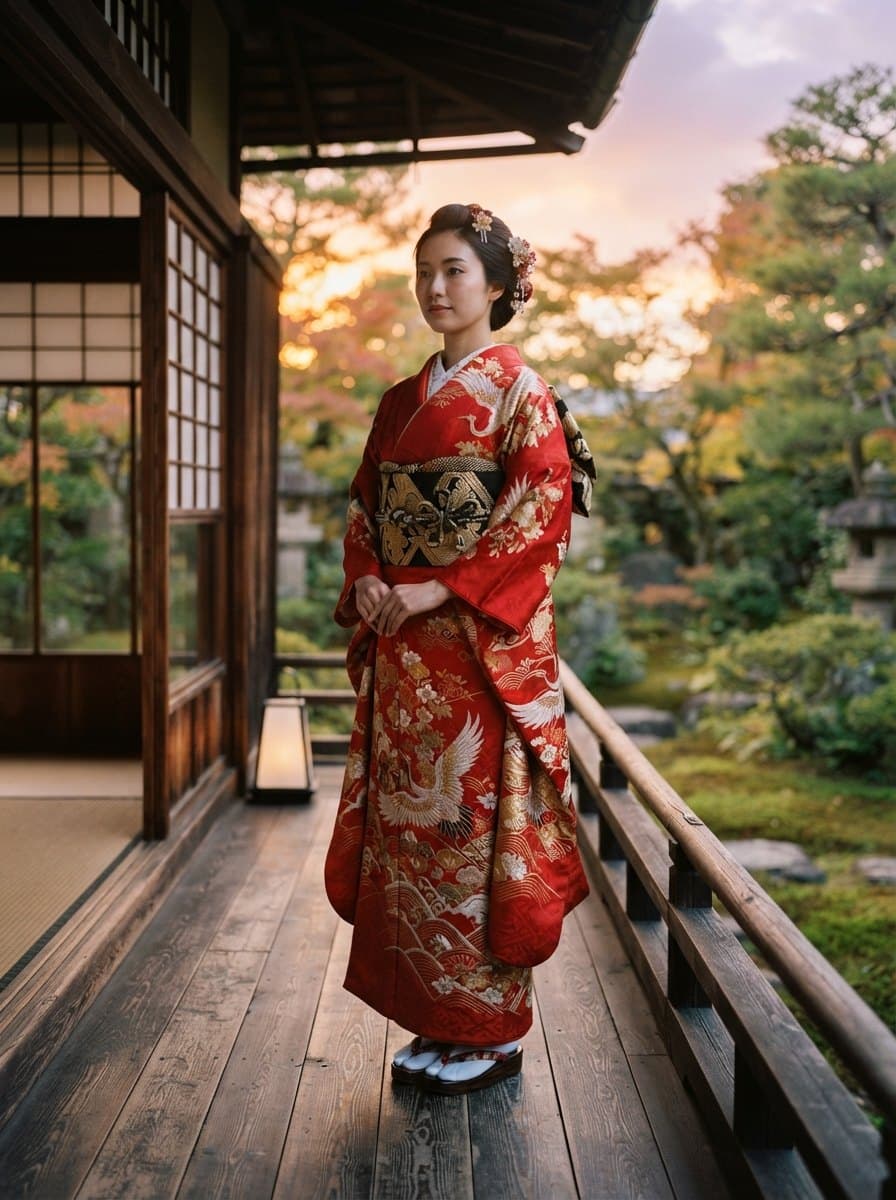
Traditional Japanese Dress Costume
Embrace the elegant silhouette of Japan's iconic traditional T-shaped robe.
The traditional dress of Japan is centered around the kimono, a beautiful T-shaped wrapped robe secured with a wide sash called an obi. People choose this look for cultural celebrations, festivals, and elegant costume events. A complete ensemble features the robe, a contrasting sash, traditional footwear, and classic hair accessories.
- Difficulty
- Medium
- Time
- ~20 min
- Budget
- $45–150
Try it on
See yourself as Traditional Japanese Dress
One clear photo of yourself; we render you in this costume — face untouched, full body, about 20 seconds.
One render, $1. No account needed — if it fails you're not charged. Pricing.
Your photo is sent to Google's Gemini API to make the render and isn't used for training. Renders are AI-generated and labelled.
Want a different costume on this photo, or a whole group in costume? Open the Try-On Studio.
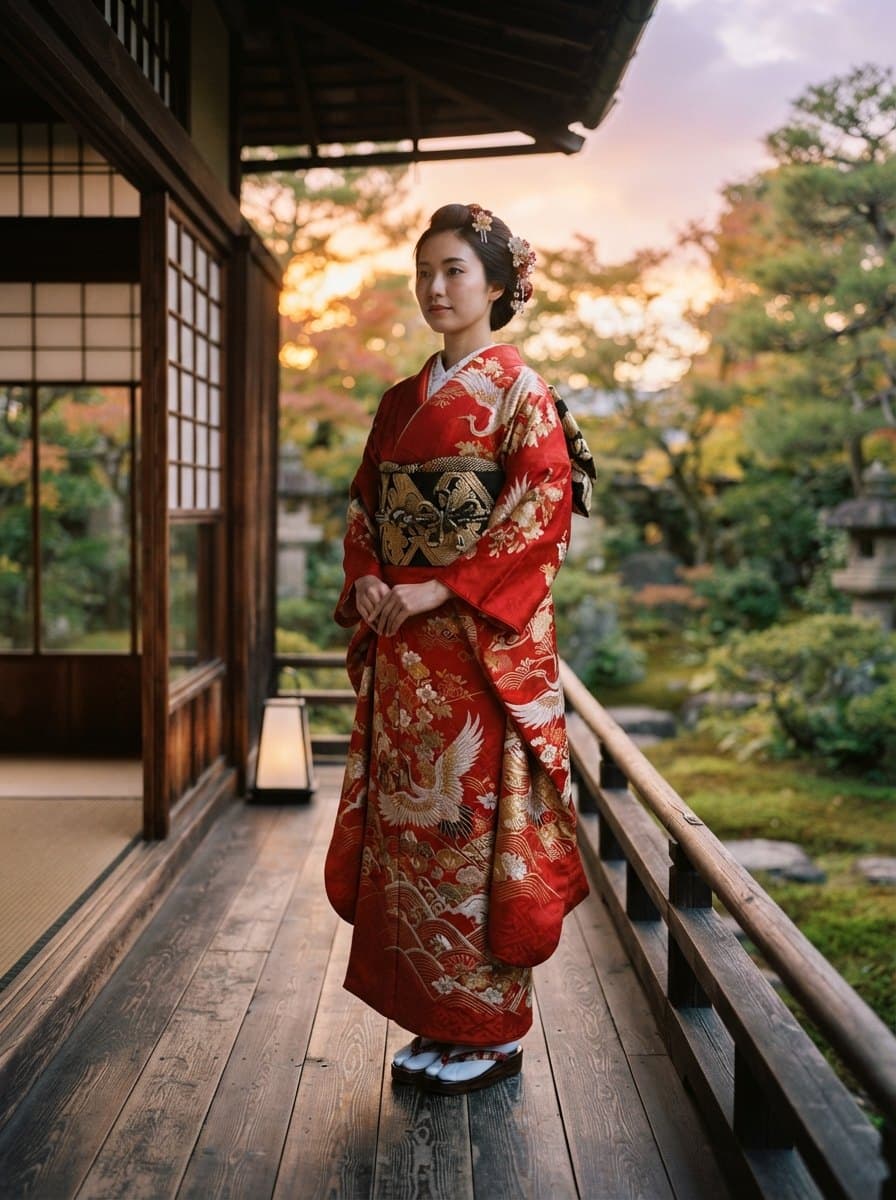
What you need for a Traditional Japanese Dress costume
Short on time? Buy it ready-made
Spirit Halloween sells the complete Traditional Japanese Dress costume — one box instead of 6 pieces.
Kimono or Yukata Robe
A full-length, T-shaped cotton or silk robe with wide, hanging sleeves, featuring traditional floral, geometric, or seasonal patterns.
DIY: Use a long, wide-sleeved satin or cotton robe with a vibrant floral print.
Obi Belt
A wide, stiff fabric sash wrapped around the waist, typically in a solid contrasting color to the robe.
DIY: Wrap a wide strip of stiff satin fabric or a wide corset belt around your waist.
Nagajuban (Under-robe)
A thin white cotton collar slip worn underneath the main kimono to keep the outer garment clean.
DIY: Wear a white V-neck t-shirt or lightweight white robe underneath.
Geta Sandals
Traditional wooden thonged sandals with raised wooden blocks on the sole.
DIY: Substitute with simple flat flip-flops or neutral slip-on sandals.
Tabi Socks
White ankle-high socks with a split toe designed specifically to be worn with thonged sandals.
DIY: Wear standard white ankle socks, or cut a small slit between the big toe and second toe of a pair of white socks.
Kanzashi Hairpin
An ornamental hairpin decorated with silk flowers, tassels, or beads.
DIY: Secure a silk flower to a chopstick or a decorative hair clip.
Rather not assemble it? See ready-made Traditional Japanese Dress costumes at Spirit Halloween ↗
How to put it together
- 1
Put on the white under-robe or V-neck shirt so the white collar will peek out slightly at the neck.
- 2
Slip into the kimono robe, ensuring the back seam is centered along your spine.
- 3
Wrap the right side of the kimono over your chest first, then wrap the left side over the right (left-over-right is the correct traditional way; right-over-left is reserved for funerals).
- 4
Secure the wrapped robe temporarily with a thin ribbon or tie around your waist.
- 5
Wrap the wide obi belt over the tie around your midsection, securing it snugly, and position the decorative bow or knot at the back.
- 6
Put on the white split-toe tabi socks and step into the wooden geta sandals.
- 7
Style your hair up and slide the decorative kanzashi hairpin into the side of your bun.
Makeup & hair
Style hair in a neat, elegant updo, such as a high bun or chignon, to showcase the back of the neck. Keep makeup classic and refined with smooth, even skin, subtle eyeliner, and a defined red lip.
Traditional Japanese Dress for couples, groups, kids & more
- couples
- Pair a colorful women's floral yukata with a men's dark-colored yukata or samue set.
- group
- Coordinate a group wearing different colored yukatas, perfect for representing a summer festival outing.
- kids
- A kid-sized cotton yukata with a pre-tied elastic obi belt for easy movement.
- Plus size
- Look for adjustable wraparound yukatas with extra-long obi sashes to customize the fit.
- pet
- A lightweight pet kimono harness with a soft, printed fabric design.
Tips
- Always wrap the left side of the robe over the right side; wrapping right-over-left is a cultural faux pas.
- Wear lightweight, breathable clothing underneath, as wrapping multiple layers can get warm.
- If walking in wooden geta sandals is difficult, practice beforehand or swap them for comfortable flat sandals.
- Keep your posture upright to help the stiff obi belt sit comfortably and maintain the garment's clean lines.
Did you know? The word 'kimono' literally translates to 'thing to wear' in Japanese (ki meaning 'to wear' and mono meaning 'thing').