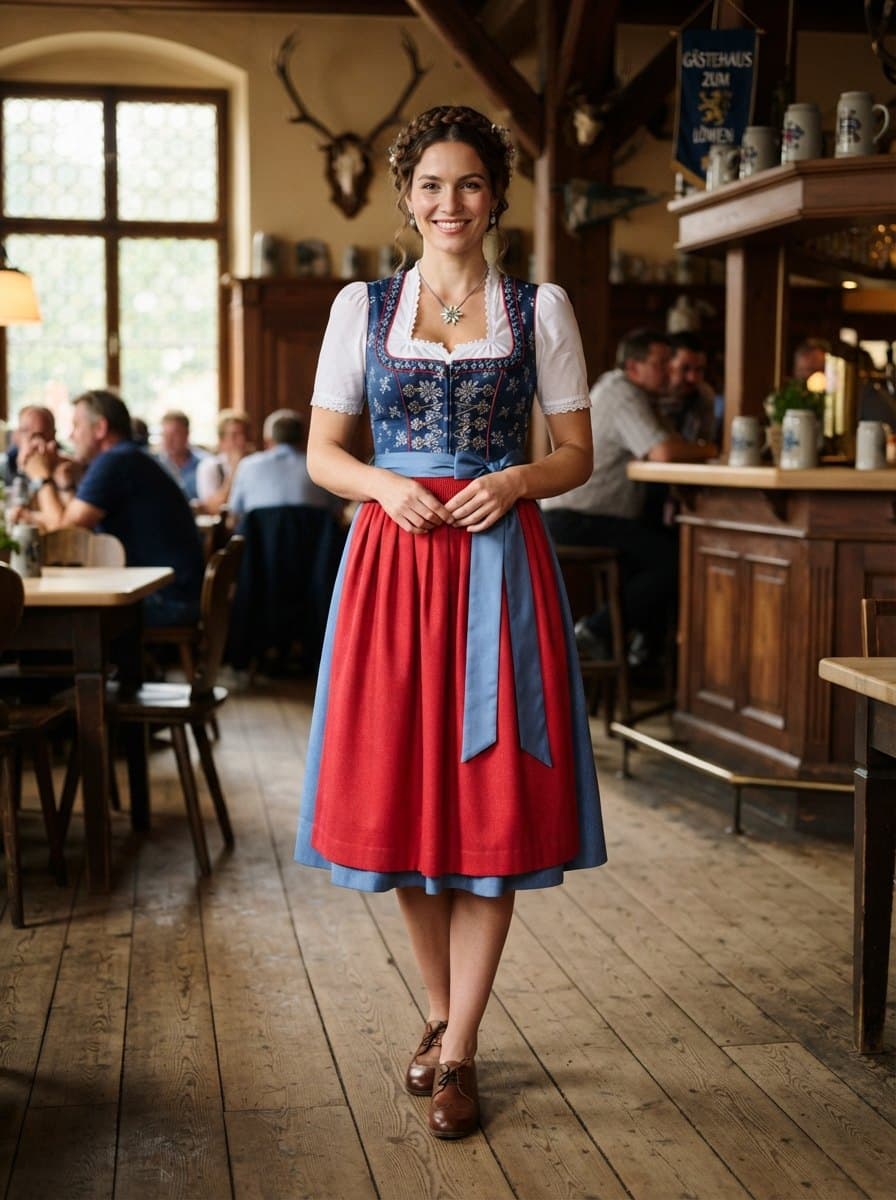
Traditional German Dress Costume
Embrace Bavarian tradition with an authentic Dirndl or Lederhosen look.
Traditional German dress, known historically as Tracht, is a beloved choice for Oktoberfest, cultural festivals, and costume parties. The classic female look features a Dirndl—consisting of a bodice, blouse, full skirt, and apron—while the male counterpart centers on leather Lederhosen with suspenders. This guide helps you assemble a high-quality, authentic Bavarian outfit that looks festive and fits comfortably.
- Difficulty
- Medium
- Time
- ~30 min
- Budget
- $45–150
Try it on
See yourself as Traditional German Dress
One clear photo of yourself; we render you in this costume — face untouched, full body, about 20 seconds.
One render, $1. No account needed — if it fails you're not charged. Pricing.
Your photo is sent to Google's Gemini API to make the render and isn't used for training. Renders are AI-generated and labelled.
Want a different costume on this photo, or a whole group in costume? Open the Try-On Studio.
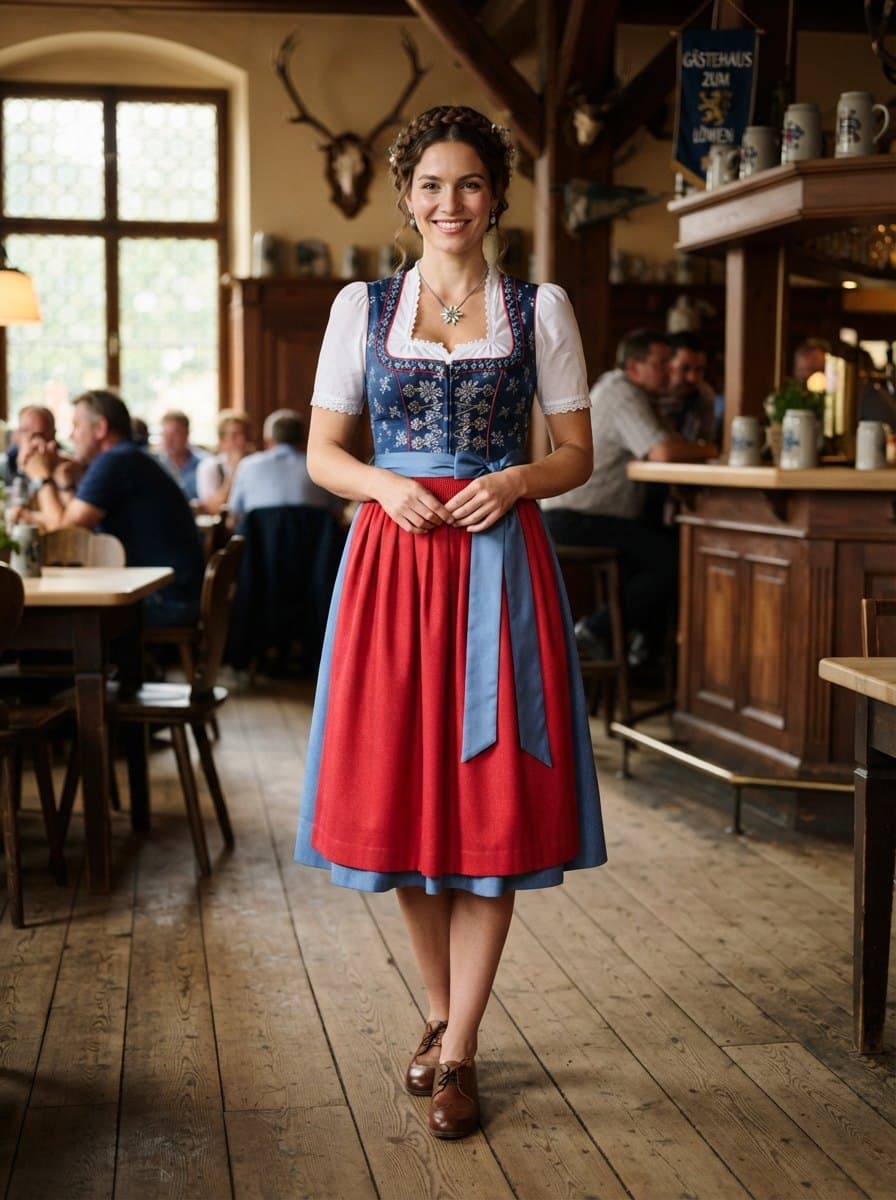
What you need for a Traditional German Dress costume
Short on time? Buy it ready-made
Spirit Halloween sells the complete Traditional German Dress costume — one box instead of 6 pieces.
Dirndl Dress
A sleeveless dress featuring a fitted, structured bodice with front lacing and a full, knee-length or midi-length pleated skirt.
DIY: Use a solid-colored sleeveless A-line dress and add a lace-up ribbon panel to the front of the bodice.
White Dirndl Blouse
A cropped white cotton blouse with elasticized puff sleeves and a sweetheart or square neckline, worn underneath the dress.
DIY: Cut an old white peasant blouse to crop length and add elastic to the hem.
Dirndl Apron
A contrasting satin or cotton half-apron tied around the waist with a wide, prominent ribbon bow.
DIY: Hem a rectangular piece of matching fabric and sew a wide satin ribbon along the top edge to act as the waistband and tie.
Lederhosen (Alternative)
Traditional leather shorts featuring H-shaped suspenders, a drop-front flap, and rustic embroidery.
DIY: Attach brown suspenders to brown cargo shorts and paint simple folk-art embroidery on the front flap.
Checkered Trachten Shirt
A button-down shirt in a small red-and-white or blue-and-white gingham pattern, worn under Lederhosen.
DIY: Use any red or blue gingham button-down shirt from your closet.
Alpine Hat
A grey or green wool felt hat decorated with a cord trim and a feather or brush detail.
DIY: Attach a pheasant feather and a twisted green cord to a grey felt fedora.
Rather not assemble it? See ready-made Traditional German Dress costumes at Spirit Halloween ↗
How to put it together
- 1
Put on the cropped white blouse first, adjusting the drawstring neckline to your preferred height.
- 2
Step into the dirndl dress, zip or button it up, and thread the satin ribbon through the decorative bodice hooks to lace up the front.
- 3
Tie the apron around your waist, positioning the bow deliberately: left side if single, right side if taken, or center-back for children or servers.
- 4
If opting for the Lederhosen look, put on the checkered shirt, pull on the leather shorts, and secure the H-suspenders over your shoulders.
- 5
Put on white or cream knee-high knit socks (or slouchy calf socks for the Lederhosen look) and wear comfortable leather flats, Mary Janes, or loafers.
- 6
Top off either look with a felt Alpine hat tilted slightly to one side.
Makeup & hair
Style your hair in classic Bavarian braids, such as double milkmaid braids or two side braids tied with small ribbons. Keep makeup fresh and natural with rosy cheeks and a soft pink or red lip.
Traditional German Dress for couples, groups, kids & more
- couples
- One partner wears a colorful Bavarian Dirndl while the other wears matching Lederhosen with a coordinating checkered shirt.
- group
- A lively group dressed in alternating Dirndls and Lederhosen, carrying decorative plastic beer steins.
- kids
- Miniature versions of Dirndls with elastic waistbands and soft cotton Lederhosen for easy movement.
- Plus size
- Look for dirndls with adjustable lace-up bodices and elasticized blouses that allow you to customize the fit across the bust and waist.
- pet
- A dog-sized green alpine hat or a small brown harness designed to look like lederhosen suspenders.
Tips
- The apron bow placement is a traditional status symbol: left means single, right means taken, front-center means virgin, and back-center means widowed or waitress.
- Choose comfortable, closed-toe leather shoes like Mary Janes or loafers, as traditional celebrations involve lots of standing and walking.
- Opt for breathable cotton fabrics if you plan to wear this to crowded, warm indoor beer halls or outdoor summer festivals.
Traditional German Dress costume FAQ
- What is the difference between a Dirndl and Tracht?
- Tracht is the umbrella term for all traditional German regional clothing, while a Dirndl is specifically the women's dress style originating from the Alpine regions.
- How long should a traditional Dirndl skirt be?
- Traditionally, a Dirndl skirt should reach at least to the knee or mid-calf; micro-mini versions are modern costume variations rather than authentic wear.
- What do men wear under Lederhosen?
- Men traditionally wear a checkered or plain white button-down shirt under the suspenders, along with thick wool socks and leather shoes.
Did you know? The traditional dirndl apron bow is a subtle communication tool: tying it on the left side historically signaled that the wearer was single and open to conversation.