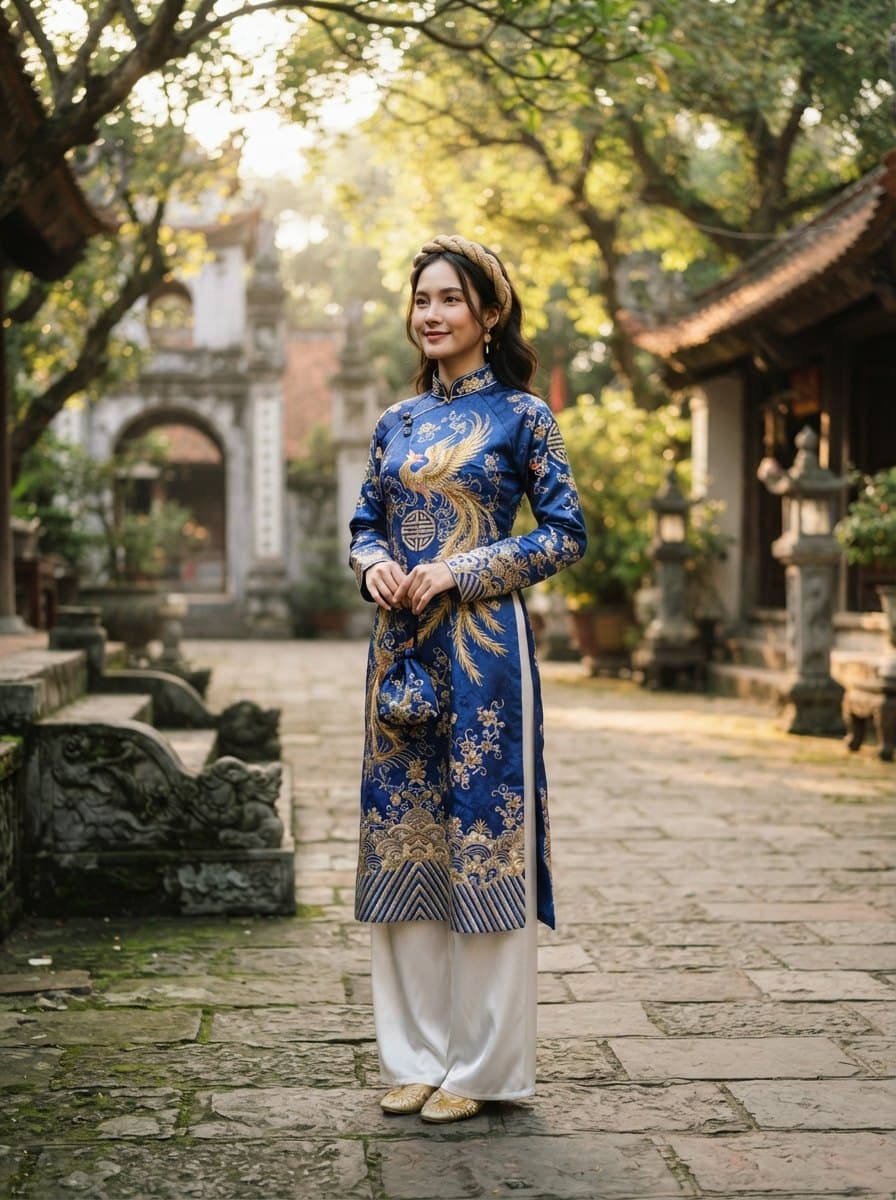
Ao Dai Costume
Embody elegance and cultural heritage in Vietnam's iconic national dress.
The Ao Dai is the elegant national garment of Vietnam, worn by both women and men for formal occasions, weddings, and Lunar New Year (Tết). This classic look consists of a long, form-fitting tunic with high side slits worn over flowing silk trousers. It is celebrated globally for its graceful silhouette and rich cultural significance.
- Difficulty
- Easy
- Time
- ~15 min
- Budget
- $40–150
Try it on
See yourself as Ao Dai
One clear photo of yourself; we render you in this costume — face untouched, full body, about 20 seconds.
One render, $1. No account needed — if it fails you're not charged. Pricing.
Your photo is sent to Google's Gemini API to make the render and isn't used for training. Renders are AI-generated and labelled.
Want a different costume on this photo, or a whole group in costume? Open the Try-On Studio.
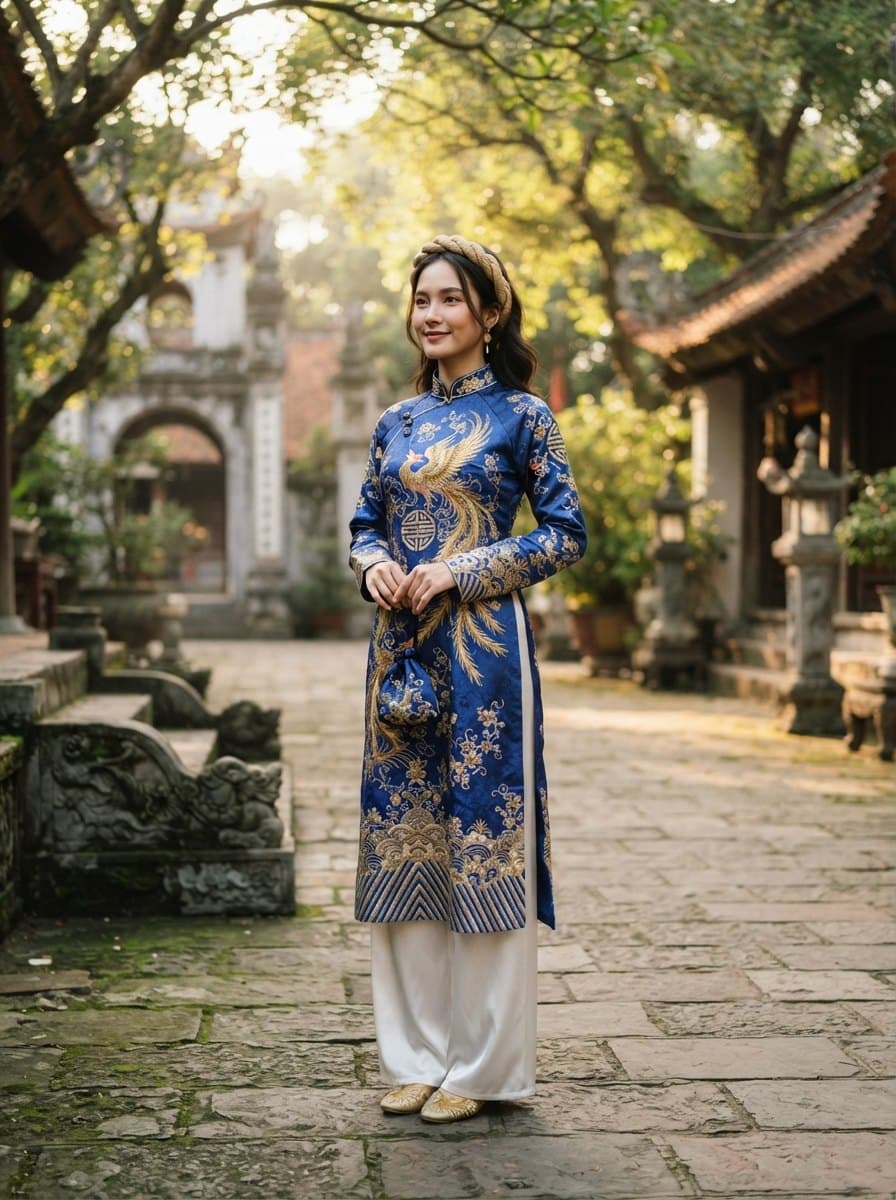
What you need for a Ao Dai costume
Short on time? Buy it ready-made
Spirit Halloween sells the complete Ao Dai costume — one box instead of 4 pieces.
Ao Dai Tunic
A long-sleeved, high-collared tunic with side splits starting at the waist, made of silk, chiffon, or brocade in a vibrant color like red, blue, or yellow.
Wide-Leg Trousers
Flowing, wide-legged silk or satin pants, typically in white, black, or a color that complements the tunic.
Khan Dong Headband
An optional traditional circular fabric crown or turban that matches the color and pattern of the tunic.
DIY: Wrap a stiff fabric or matching scarf into a structured circular crown.
Heels or Flats
Classic closed-toe pumps or elegant flats in a neutral tone like nude, white, or black.
Rather not assemble it? See ready-made Ao Dai costumes at Spirit Halloween ↗
How to put it together
- 1
Put on the wide-legged silk trousers first, securing them comfortably at your natural waist.
- 2
Slip into the long tunic, carefully fastening the side buttons or zipper from the collar down to the waist.
- 3
Adjust the side slits of the tunic so they align perfectly with the waistband of your trousers.
- 4
Smooth down the front and back panels of the tunic to ensure a sleek, unwrinkled drape.
- 5
Place the optional Khan Dong headband securely on your head, positioning it slightly back from the hairline.
- 6
Complete the look with simple, elegant closed-toe heels or flats to elevate the silhouette.
Makeup & hair
Keep hair sleek and polished, either worn straight and down, or styled in a low, elegant bun. Makeup should be classic and natural, featuring soft rosy cheeks and a defined lip color to complement the tunic.
Ao Dai for couples, groups, kids & more
- couples
- Pair a women's colorful embroidered Ao Dai with a men's brocade Ao Dai (which features a round collar, shorter tunic length, and a matching Khan Dong).
- group
- A group can wear matching white Ao Dais (reminiscent of Vietnamese high school uniforms) or a vibrant array of colors for Lunar New Year.
- kids
- Children's Ao Dais are widely available in bright, playful colors with comfortable elastic-waist pants.
- Plus size
- Look for modern Ao Dais made from stretchy fabrics or custom-tailored options that offer comfort around the bust and waist.
Tips
- Choose seamless undergarments, as the thin silk or chiffon fabric of the tunic can be quite form-fitting and revealing.
- If wearing a traditional sheer chiffon Ao Dai, wear a matching camisole underneath for comfortable coverage.
- Steam or iron the tunic and trousers on a low silk setting before wearing to remove any creases.
Ao Dai costume FAQ
- What is an Ao Dai?
- The Ao Dai is the traditional national garment of Vietnam, featuring a long-sleeved, high-collared tunic split up the sides from the waist, worn over wide-leg silk trousers.
- Can non-Vietnamese people wear an Ao Dai?
- Yes, wearing an Ao Dai is welcomed as a respectful appreciation of Vietnamese culture, especially during weddings, cultural festivals, or Lunar New Year (Tết).
- What colors are traditionally worn?
- Red is highly popular for weddings and Tết as it symbolizes luck and prosperity. White is traditionally worn by high school students, while purple is associated with the poetic city of Huế.
Did you know? The modern silhouette of the Ao Dai was popularized in the 1930s by Hanoi artist Nguyen Cat Tuong, who combined traditional designs with French fashion influences.