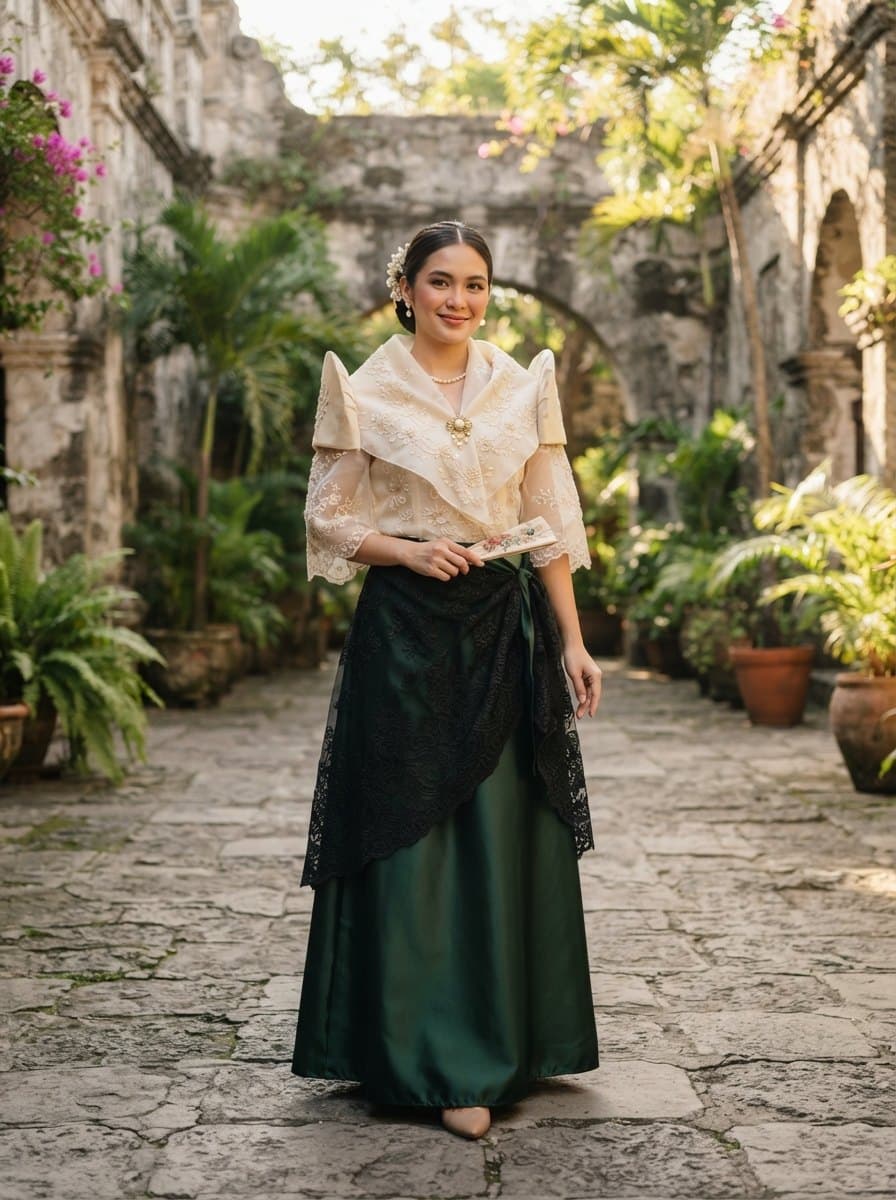
Maria Clara Costume
Embody the timeless elegance of traditional Filipino heritage and colonial-era grace.
The Maria Clara costume, named after the tragic heroine of José Rizal's 1887 novel 'Noli Me Tángere,' represents the epitome of traditional Filipina elegance. Historically known as the traje de mestiza, this Spanish colonial-era ensemble is a staple for cultural festivals, heritage celebrations, and historical cosplay. The look is defined by its distinctive butterfly sleeves, structured collar, and flowing skirt.
- Difficulty
- Medium
- Time
- ~45 min
- Budget
- $40–150
Try it on
See yourself as Maria Clara
One clear photo of yourself; we render you in this costume — face untouched, full body, about 20 seconds.
One render, $1. No account needed — if it fails you're not charged. Pricing.
Your photo is sent to Google's Gemini API to make the render and isn't used for training. Renders are AI-generated and labelled.
Want a different costume on this photo, or a whole group in costume? Open the Try-On Studio.
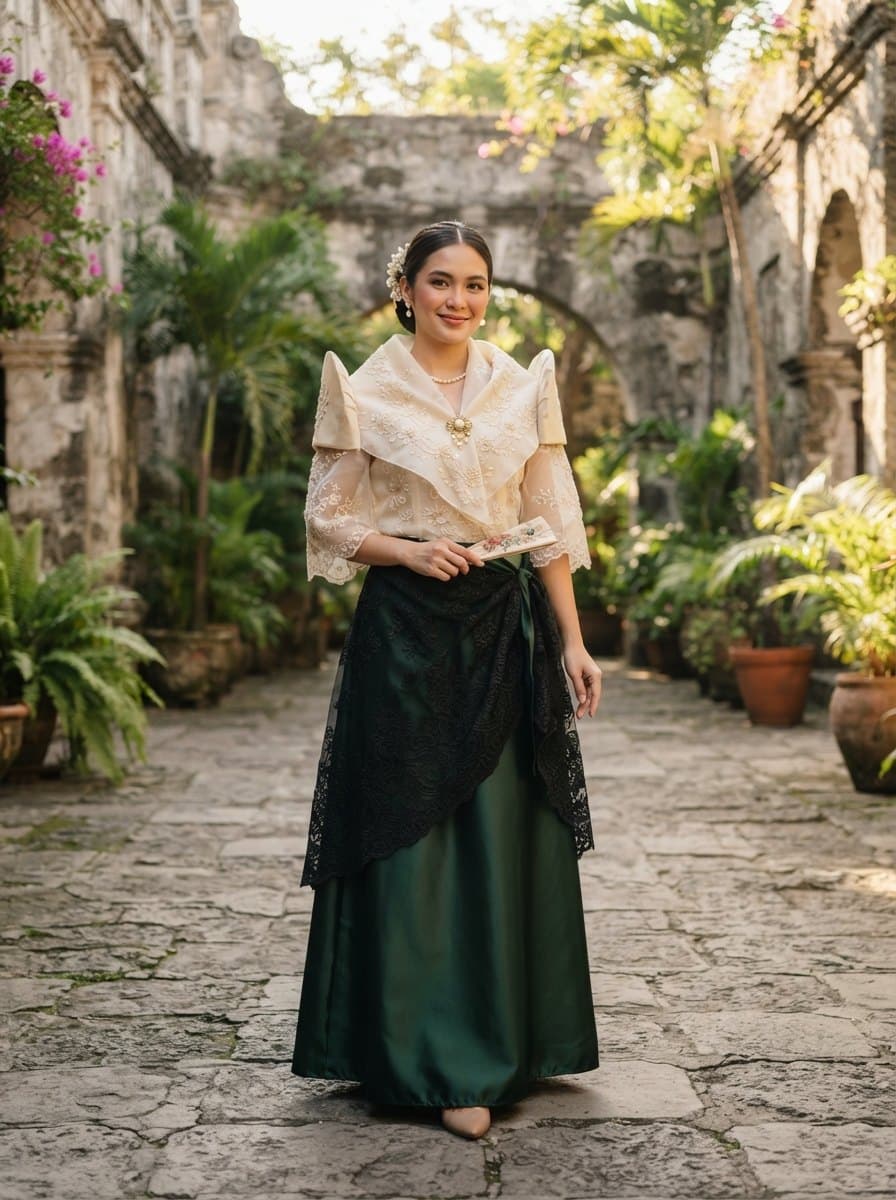
What you need for a Maria Clara costume
Short on time? Buy it ready-made
Spirit Halloween sells the complete Maria Clara costume — one box instead of 6 pieces.
Baro (Blouse)
A lightweight, sheer long-sleeved blouse, traditionally made of piña or jusi fabric, featuring wide bell or butterfly sleeves and intricate embroidery.
DIY: Use a sheer white or cream long-sleeved blouse and starch the sleeves heavily to give them a stiff, flared shape.
Saya (Skirt)
A floor-length, panelled skirt, typically made of satin or silk, in a contrasting color or pattern like plaid, stripes, or solid jewel tones.
DIY: Wear a long, flowing A-line maxi skirt in a rich satin fabric or traditional plaid pattern.
Pañuelo (Shawl)
A matching stiff, triangular scarf worn over the shoulders like a collar, fastened at the chest with a brooch.
DIY: Fold a square piece of matching sheer fabric or lace into a triangle, starch it stiffly, and drape it over your shoulders.
Tapis (Overskirt)
A dark-colored, knee-length wrap-around overskirt worn tightly over the main saya, traditionally made of lace or dark cotton.
DIY: Wrap a short, dark lace shawl or a piece of black fabric tightly around your hips over your skirt.
Abaniko (Folding Fan)
A traditional hand-carved wooden or lace folding fan, held gracefully in one hand.
DIY: Use any decorative wooden or lace folding fan.
Gold Brooch and Jewelry
A vintage-style gold brooch or pin to secure the pañuelo, paired with gold drop earrings.
DIY: Use any gold safety pin decorated with a vintage-style earring or pendant.
Rather not assemble it? See ready-made Maria Clara costumes at Spirit Halloween ↗
How to put it together
- 1
Put on the floor-length saya skirt, ensuring it sits comfortably at your waist.
- 2
Wrap the dark tapis overskirt tightly around your hips over the saya, securing it at the waist.
- 3
Put on the sheer baro blouse, carefully smoothing out the wide bell or butterfly sleeves.
- 4
Drape the stiffened pañuelo shawl over your shoulders, crossing the ends over your chest.
- 5
Secure the crossed ends of the pañuelo at the center of your chest using a decorative gold brooch.
- 6
Put on gold drop earrings and slide into simple flat or low-heeled slip-on shoes.
- 7
Carry the abaniko folding fan in your hand to complete the colonial-era look.
Makeup & hair
Style your hair in a neat, low bun parted down the middle, adorned with a decorative gold hairpin or fresh flowers. Keep makeup soft and natural with a warm complexion, subtle eyeliner, and a soft rose or berry lip color.
Maria Clara for couples, groups, kids & more
- couples
- Pair with a partner wearing a traditional Barong Tagalog (embroidered sheer long-sleeve shirt) over black trousers.
- group
- Have a group dress in various styles of Filipiniana, including the modern Mestiza dress and Balintawak-style dresses.
- kids
- A miniature version featuring a pre-stitched, simplified two-piece Filipiniana dress with soft, comfortable fabrics.
- Plus size
- Choose an A-line saya skirt with an elastic waistband for comfort, and a baro blouse with a slightly looser cut through the torso.
Tips
- Use fabric starch on the sleeves of the baro and the pañuelo to help them maintain their iconic, crisp, structured shape.
- Wear a nude or white camisole underneath the baro blouse, as the traditional fabric is very sheer.
- Walk with small, graceful steps, as the tight tapis overskirt restricts wide strides, which fits the historical posture of the character.
- Keep the folding fan functional; it is both a screen-accurate prop and highly practical for warm weather events.
Maria Clara costume FAQ
- What are the four main parts of a Maria Clara dress?
- The four traditional parts are the baro (sheer embroidered blouse), the saya (long paneled skirt), the pañuelo (stiff shoulder shawl), and the tapis (dark wrap-around overskirt).
- What fabric is traditionally used for a Maria Clara dress?
- The blouse and shawl are traditionally made from indigenous Philippine fibers like piña (pineapple fiber) or jusi (banana fiber), which are sheer, lightweight, and stiff.
- Is a Maria Clara dress comfortable to wear?
- Yes, but the stiff collar (pañuelo) and the tight overskirt (tapis) can restrict upper body and leg movement slightly. Opting for softer modern blends can increase comfort.
Did you know? The Maria Clara gown evolved from the pre-colonial baro't saya, adapting to Spanish modesty standards during the 19th century to become the national costume of Filipino women.