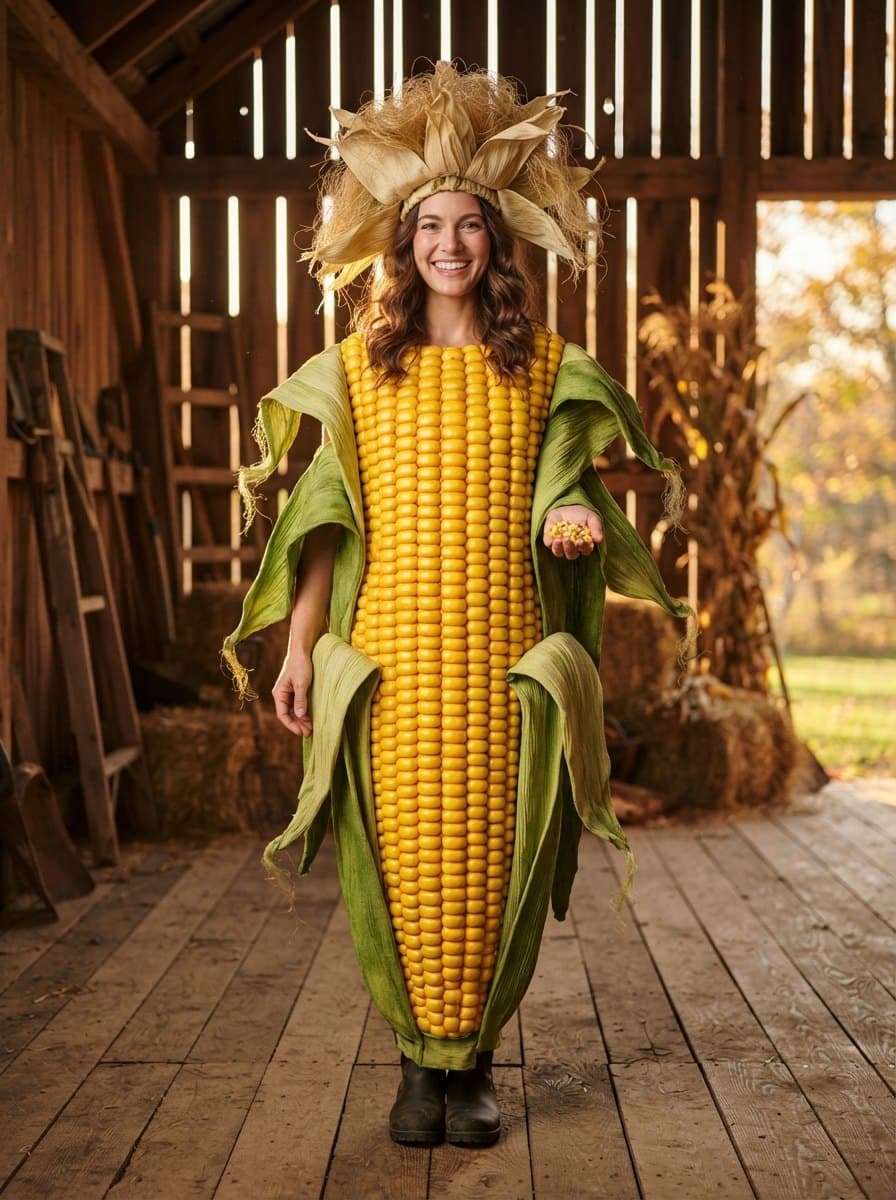
Corn Costume
A highly a-maize-ing look that is guaranteed to bring the laughs.
Whether you want to celebrate agricultural life or just love a good food pun, a corn on the cob costume is a crowd-pleasing choice for Halloween. This look typically centers around a bright yellow kernel-textured body suit or tunic framed by leafy green husks. It is a lighthearted, comfortable option that works perfectly for solo wearers, couples, or themed family groups.
- Difficulty
- Easy
- Time
- ~15 min
- Budget
- $20–55
Try it on
See yourself as Corn
One clear photo of yourself; we render you in this costume — face untouched, full body, about 20 seconds.
One render, $1. No account needed — if it fails you're not charged. Pricing.
Your photo is sent to Google's Gemini API to make the render and isn't used for training. Renders are AI-generated and labelled.
Want a different costume on this photo, or a whole group in costume? Open the Try-On Studio.
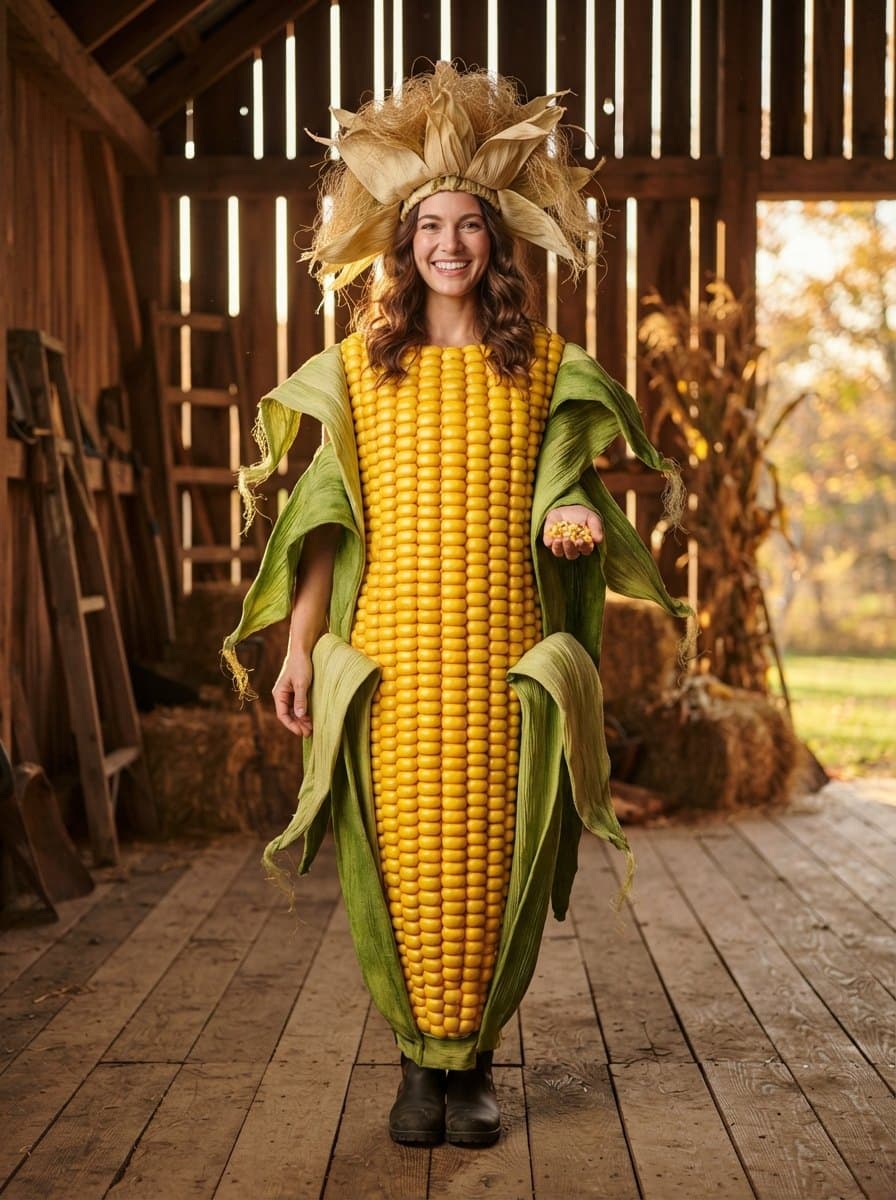
What you need for a Corn costume
Short on time? Buy it ready-made
Spirit Halloween sells the complete Corn costume — one box instead of 4 pieces.
Corn cob tunic
A sleeveless, slip-on foam tunic featuring a photo-realistic yellow corn kernel print with attached green fabric husks at the sides.
DIY: Wear a bright yellow sweatshirt and draw a grid of kernels on the front using an orange or brown fabric marker.
Green felt or fabric husks
Long, pointed leaf shapes made from stiff green felt to frame the sides of the yellow tunic.
DIY: Cut large leaf shapes out of green poster board or felt and safety-pin them to your shoulders and sides.
Corn silk tassel headpiece
A headpiece or headband topped with light brown, tan, or yellowish raffia or yarn to mimic corn silk.
DIY: Hot-glue clusters of light brown yarn or tan raffia to a simple plastic headband.
Neutral base layers
A long-sleeve shirt and pants in solid black, green, or brown to wear underneath the tunic.
DIY: Use any solid-colored dark long-sleeve shirt and matching pants from your closet.
Rather not assemble it? See ready-made Corn costumes at Spirit Halloween ↗
How to put it together
- 1
Put on your chosen neutral base layer of dark or green pants and a long-sleeve shirt.
- 2
Slip the foam corn tunic over your head, aligning your arms through the side armholes.
- 3
Adjust the green fabric husks so they frame the yellow kernel pattern on your chest and back.
- 4
Place the corn silk tassel headband on your head, letting the raffia fibers stand upright or drape slightly.
- 5
Ensure the tunic hangs straight and is comfortable for walking and sitting.
Makeup & hair
Keep your hair tucked back under the headband or styled naturally. For makeup, simple yellow face paint accents on the cheeks or a clean, natural look works best.
Corn for couples, groups, kids & more
- couples
- Pair up as Corn on the Cob and a stick of butter, or go as Corn and a Scarecrow.
- group
- Create a Farmers Market group with friends dressed as peas, carrots, tomatoes, and a farmer.
- kids
- A plush, sleeveless bunting or slip-on vest makes an adorable, warm option for toddlers.
- Plus size
- Look for open-sided foam tunics with adjustable velcro straps for a comfortable, flexible fit.
- pet
- A small yellow sweater with green felt leaves attached to the back makes a quick pet costume.
Tips
- Wear comfortable shoes since the tunic will draw all the attention to your upper body.
- If the foam tunic arrives creased, hang it in a steamy bathroom for 20 minutes to smooth out the wrinkles.
- Keep your arms free by choosing a sleeveless tunic style, making it easy to hold drinks or snacks at parties.
Corn costume FAQ
- How do you make a DIY corn costume?
- You can wear a yellow shirt and glue rows of yellow bubble wrap or painted egg cartons to the front, then attach green felt leaves to the sides.
- What is the best base layer to wear under a corn tunic?
- Solid black or dark green long-sleeve shirts and leggings work best because they make the bright yellow and green of the corn stand out.
- Is a foam corn costume comfortable for walking?
- Yes, most tunics end above the knee and have open bottoms, allowing for a full range of motion.
Did you know? Maize was first domesticated by indigenous peoples in southern Mexico about 9,000 years ago from a wild grass called teosinte.