Carrot Costume
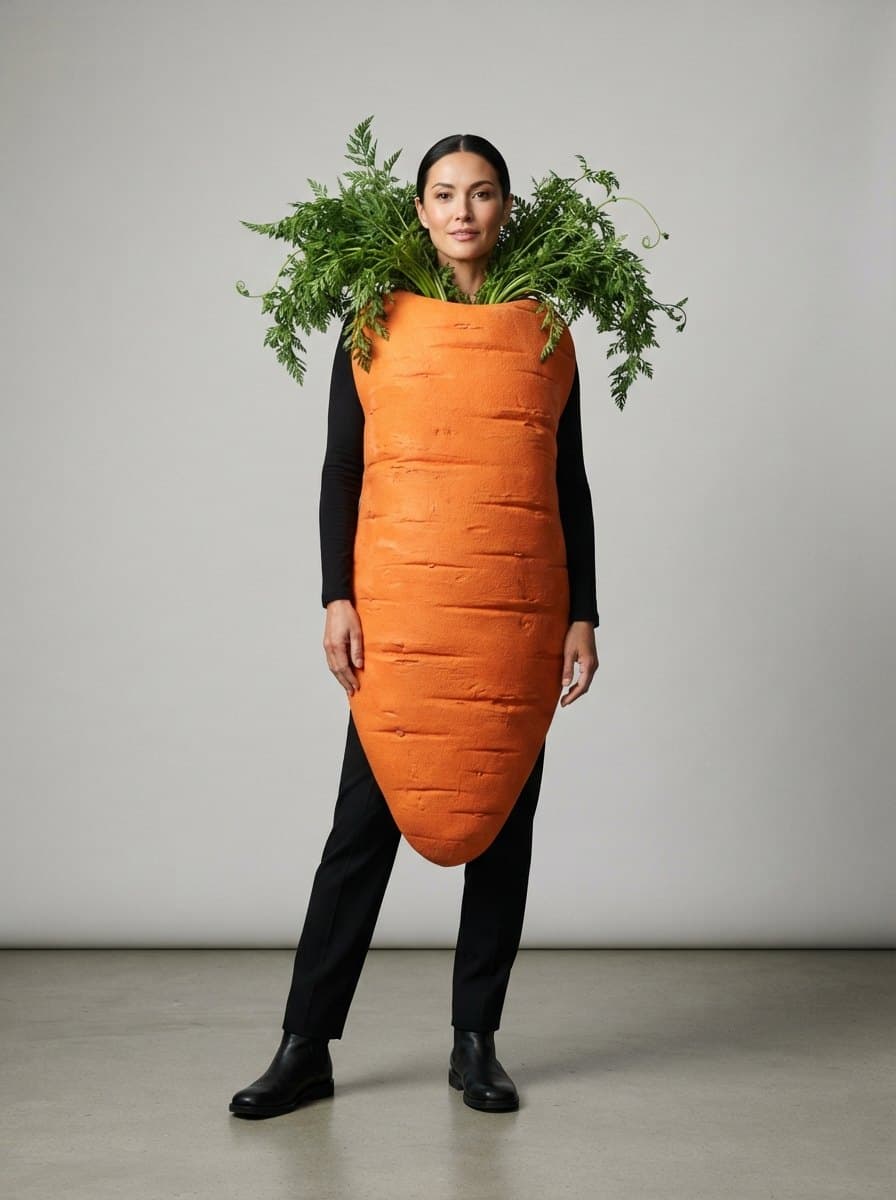
Root for yourself in this vibrant, easy-to-wear vegetable costume.
The carrot is a classic, lighthearted costume choice that is perfect for Halloween, Easter, school plays, or food-themed events. Known for its bright orange body and leafy green top, this look is instantly recognizable and always brings a smile. It is incredibly easy to wear, typically consisting of a simple slip-on tunic paired with green headwear.
- Difficulty
- Easy
- Time
- ~15 min
- Budget
- $15–45
Try it on
See yourself as Carrot
One clear photo of yourself; we render you in this costume — face untouched, full body, about 20 seconds.
One render, $1. No account needed — if it fails you're not charged. Pricing.
Your photo is sent to Google's Gemini API to make the render and isn't used for training. Renders are AI-generated and labelled.
Want a different costume on this photo, or a whole group in costume? Open the Try-On Studio.
What you need for a Carrot costume
Short on time? Buy it ready-made
Spirit Halloween sells the complete Carrot costume — one box instead of 4 pieces.
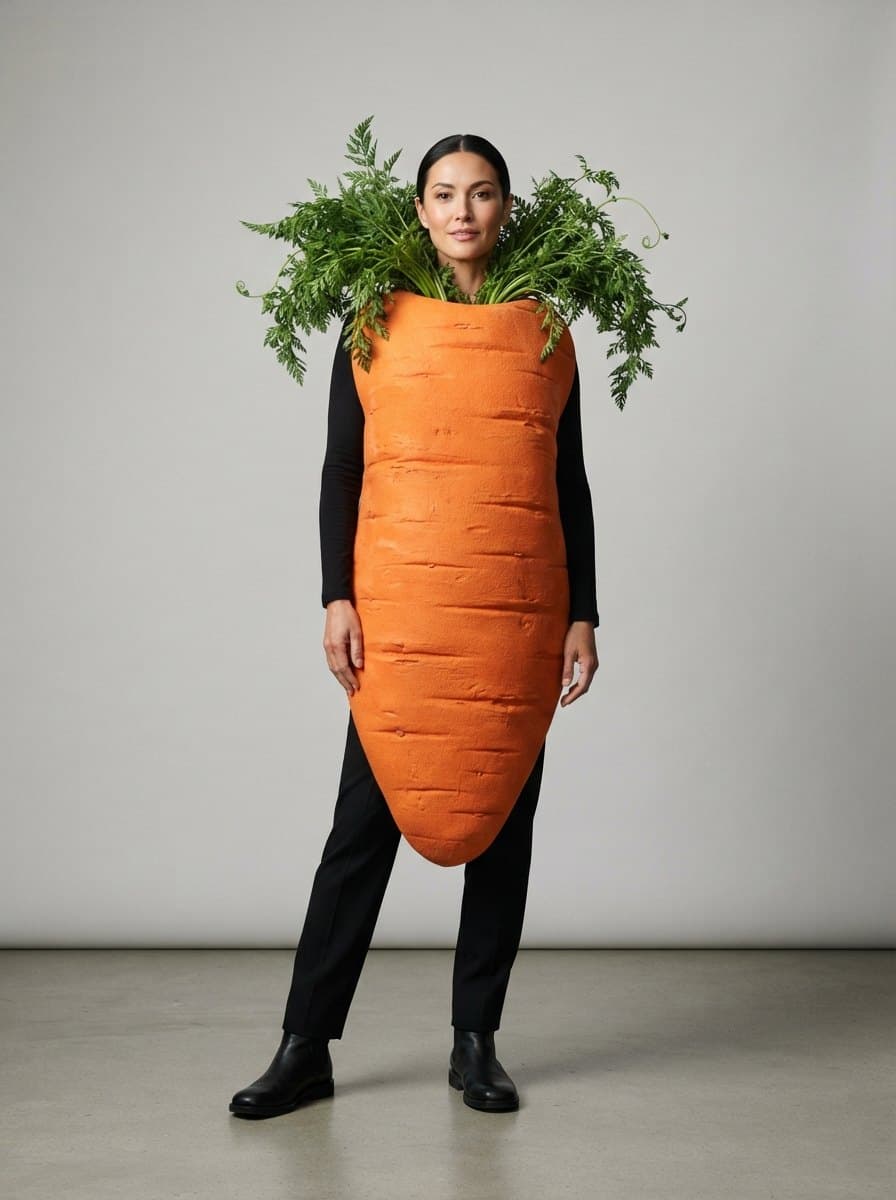
Orange carrot tunic
A sleeveless, slip-on foam or fabric tunic shaped like a tapered carrot with horizontal ridge lines.
DIY: Cut a large carrot shape out of orange felt or fleece, sew the sides leaving armholes, and stuff lightly with batting.
Green leafy headpiece
A headband or hood adorned with faux green leaves or green felt strips to represent the carrot's leafy top.
DIY: Hot glue green felt leaves or green pipe cleaners to a plain green headband.
Black long-sleeve shirt
A plain, fitted black long-sleeve shirt to wear underneath the tunic to make the orange color pop.
DIY: Use any solid black or dark green long-sleeve shirt from your closet.
Black pants or leggings
Comfortable, solid black pants, leggings, or tights to keep the focus on the carrot body.
DIY: Wear any comfortable dark-colored pants or jeans.
Rather not assemble it? See ready-made Carrot costumes at Spirit Halloween ↗
How to put it together
- 1
Put on the solid black long-sleeve shirt and black pants or leggings as your base layer.
- 2
Slip the orange carrot tunic over your head, aligning your arms with the armholes.
- 3
Adjust the tunic so it hangs evenly, ensuring the tapered bottom allows you to walk comfortably.
- 4
Place the green leafy headband or hood on your head, positioning the leaves so they stand upright.
- 5
Pair with simple black or neutral sneakers to complete the look.
Makeup & hair
Keep hair pulled back or tucked under the headpiece so the green leafy top remains the main focus. Makeup is optional, but a touch of orange face paint on the cheeks or nose can add a playful, festive touch.
Carrot for couples, groups, kids & more
- couples
- Pair up as a carrot and a rabbit, or go as a classic peas and carrots duo.
- group
- Create a garden salad group with friends dressed as tomatoes, lettuce, peas, and broccoli.
- kids
- A simple orange fleece bunting or tunic with a green felt leaf hat is comfortable and warm for toddlers.
- Plus size
- Look for open-sided tabard-style tunics with adjustable side straps for a comfortable, flexible fit.
- pet
- An orange dog sweater with green felt leaves attached to the collar makes an adorable pet outfit.
Tips
- If your foam tunic arrives creased, hang it up or steam it on low heat to smooth out the wrinkles before wearing.
- Wear comfortable shoes, as the tunic naturally draws attention down toward your legs and feet.
- For outdoor events in cold weather, layer warm thermals under the black base layer.
Carrot costume FAQ
- What should I wear under a carrot costume?
- A solid black long-sleeve shirt and black pants or leggings are best. This keeps the focus on the bright orange carrot tunic and keeps you warm.
- How do you make a DIY carrot costume?
- You can make a simple version by wearing an all-orange outfit and attaching green felt leaves or green tissue paper to a headband.
- Is a carrot costume easy to walk in?
- Yes, most carrot tunics end around the knees or mid-thigh, allowing for a full range of motion and easy walking.
Did you know? Carrots were originally purple or yellow; the vibrant orange carrots we eat today were developed in the Netherlands during the 17th century.