Traffic Light Costume
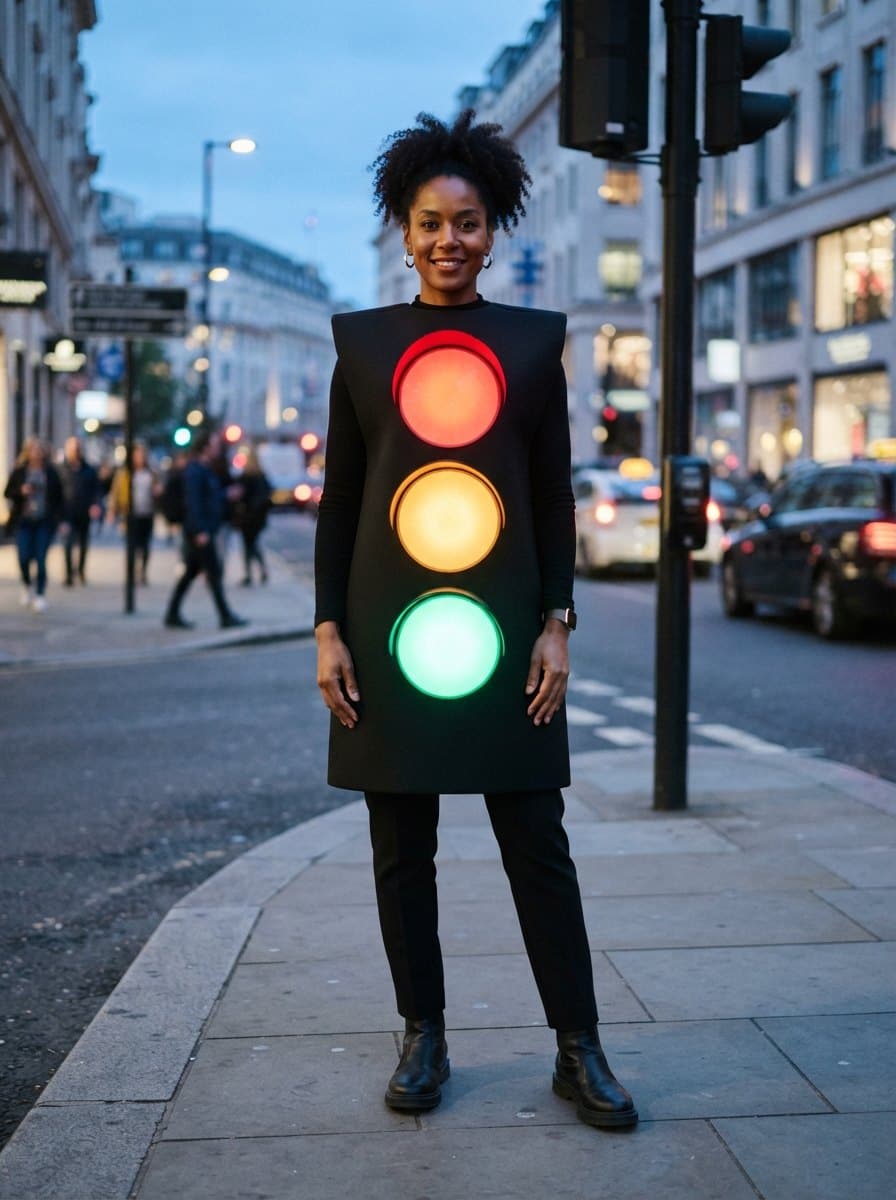
Stop, caution, and go in this classic, high-visibility novelty look.
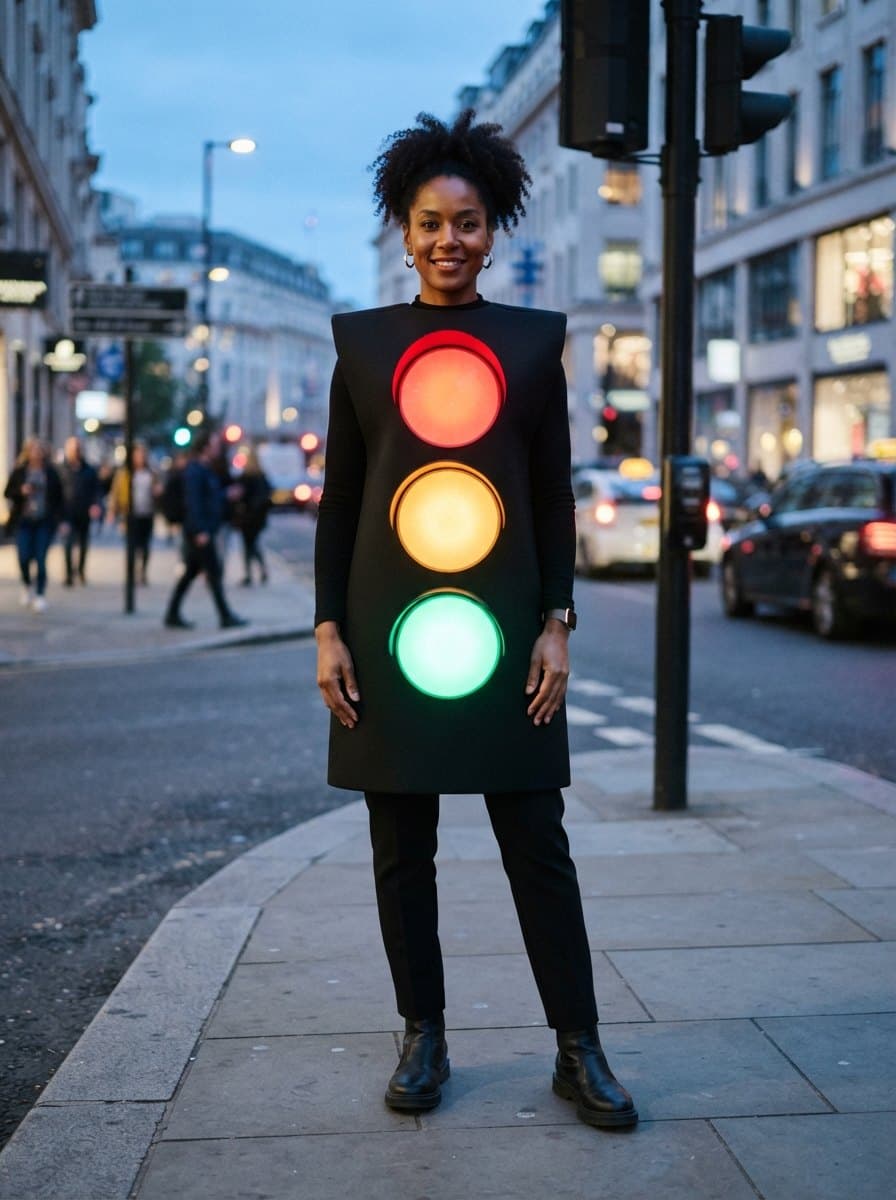
The traffic light is a classic, lighthearted choice for Halloween, school events, or group themes. It is highly recognizable, easy to wear, and can be customized with actual battery-powered lights. The look consists of a rectangular black or yellow body piece featuring the iconic red, yellow, and green signals.
- Difficulty
- Easy
- Time
- ~30 min
- Budget
- $15–45
Try it on
See yourself as Traffic Light
One clear photo of yourself; we render you in this costume — face untouched, full body, about 20 seconds.
One render, $1. No account needed — if it fails you're not charged. Pricing.
Your photo is sent to Google's Gemini API to make the render and isn't used for training. Renders are AI-generated and labelled.
Want a different costume on this photo, or a whole group in costume? Open the Try-On Studio.
What you need for a Traffic Light costume
Short on time? Buy it ready-made
Spirit Halloween sells the complete Traffic Light costume — one box instead of 4 pieces.
Black or yellow base tunic
A rectangular tabard or tunic made of soft foam, felt, or cardboard that covers the torso.
DIY: Cut a large rectangle out of a cardboard box or black felt, making holes for your head and arms.
Colored signal circles
Three large, equal-sized circles in red, yellow, and green.
DIY: Cut circles out of red, yellow, and green felt, cardstock, or plastic plates.
Base clothing
A matching black long-sleeve shirt and black pants or leggings to keep the focus on the signal.
DIY: Use any plain black clothing from your closet.
LED puck lights
Optional battery-operated tap lights to make the costume actually light up.
DIY: Use glow sticks taped inside plastic cups for a budget-friendly glow.
Rather not assemble it? See ready-made Traffic Light costumes at Spirit Halloween ↗
How to put it together
- 1
Put on the black long-sleeve shirt and black pants to create a neutral, dark background.
- 2
Prepare your tunic base, ensuring the armholes and neck opening are wide enough for comfortable movement.
- 3
Attach the three colored circles vertically down the front of the tunic: red at the top, yellow in the middle, and green at the bottom.
- 4
If using LED puck lights, mount them securely to the center of each circle using strong double-sided tape or hook-and-loop fasteners.
- 5
Slip the completed tunic over your head and adjust it so it hangs straight down your torso.
Makeup & hair
Keep hair simple and neat. No specific makeup is required, but you can paint small red, yellow, and green dots on your cheeks for a playful touch.
Traffic Light for couples, groups, kids & more
- couples
- Pair with a Stop Sign, a traffic cone, or a construction worker.
- group
- A trio can dress as individual lights (one Red, one Yellow, one Green) or a full intersection with crossing guards.
- kids
- Use a lightweight yellow felt tabard with felt circles for a comfortable, school-friendly outfit.
- Plus size
- A sandwich-board style cardboard design or a loose-fitting black poncho allows for an adjustable, comfortable fit.
- pet
- A black dog harness with three small felt circles (red, yellow, green) glued along the back.
Tips
- If trick-or-treating at night, use actual battery-powered LED lights or glow sticks to increase visibility and safety.
- Keep the tunic lightweight so you can sit down easily if wearing it to a party or school.
- Ensure the armholes are cut wide enough to wear comfortably over a thick jacket if you live in a cold climate.
Traffic Light costume FAQ
- How do you make a DIY traffic light costume light up?
- Use battery-operated LED puck lights or tap lights. Stick them to the center of your colored circles, or mount them behind translucent colored plastic plates.
- What color should the background of the traffic light be?
- While real traffic lights are usually yellow or black, a black background makes the red, yellow, and green circles stand out the most.
- Is this costume comfortable for walking around?
- Yes, if made from soft felt or a flexible foam tunic. Avoid stiff cardboard boxes if you plan to sit down or walk long distances.
Did you know? The world's first electric traffic signal was installed in Cleveland, Ohio, in 1914, featuring just red and green lights alongside a buzzer to warn of changes.