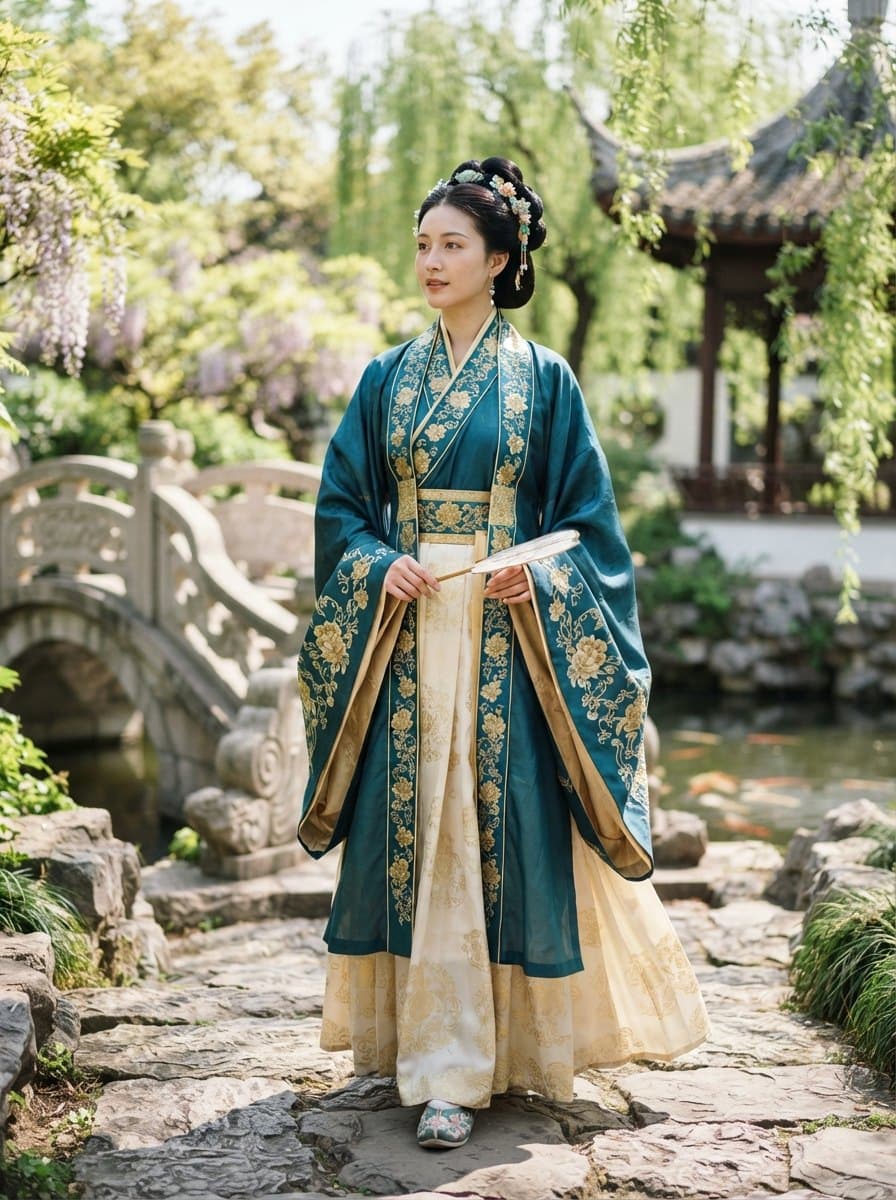
Traditional Chinese Costume
Honor centuries of elegance with beautiful, flowing traditional Chinese garments.
Traditional Chinese clothing, most famously represented by the flowing layers of Hanfu or the elegant lines of the Qipao, carries thousands of years of cultural history. People choose these garments for cultural festivals, historical reenactments, and formal celebrations. A classic Hanfu look consists of a cross-collar wrap robe, wide flowing sleeves, and a coordinating waist sash.
- Difficulty
- Medium
- Time
- ~30 min
- Budget
- $40–150
Try it on
See yourself as Traditional Chinese
One clear photo of yourself; we render you in this costume — face untouched, full body, about 20 seconds.
One render, $1. No account needed — if it fails you're not charged. Pricing.
Your photo is sent to Google's Gemini API to make the render and isn't used for training. Renders are AI-generated and labelled.
Want a different costume on this photo, or a whole group in costume? Open the Try-On Studio.
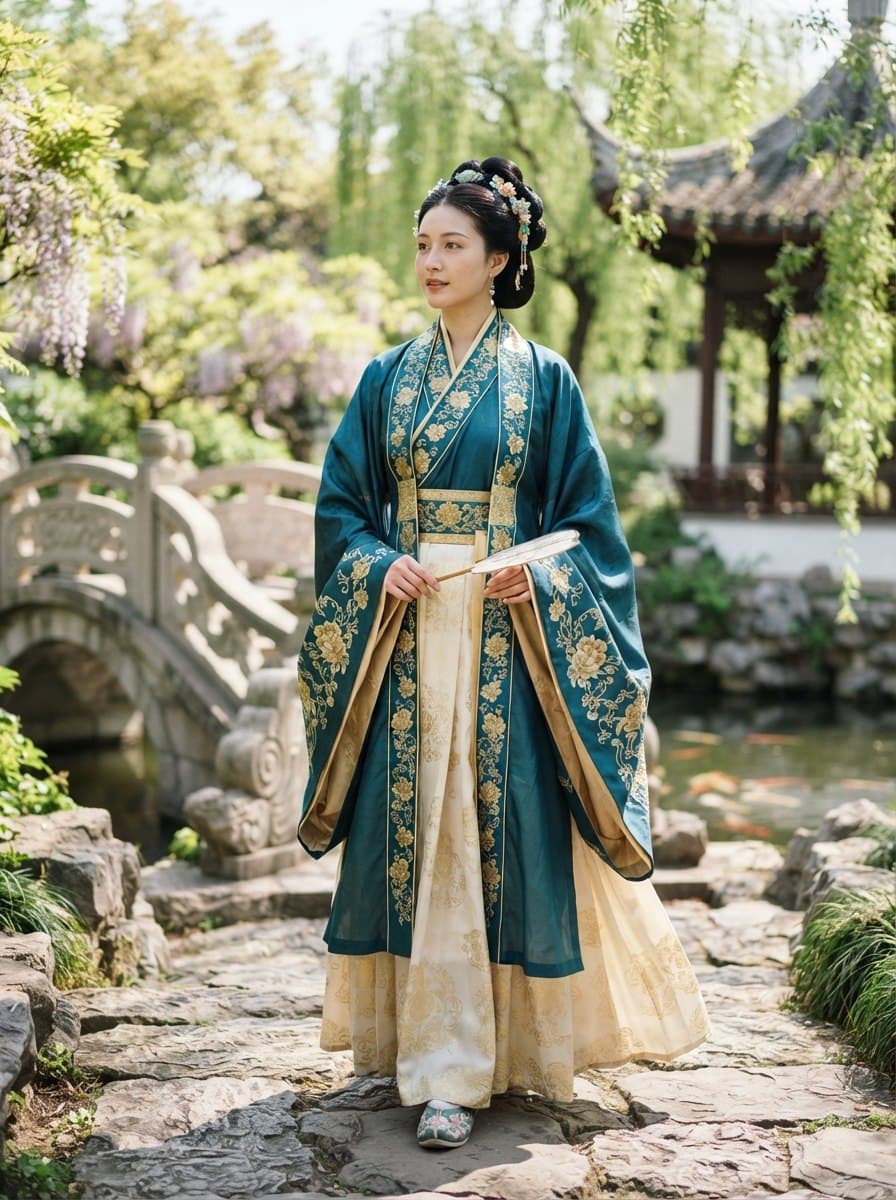
What you need for a Traditional Chinese costume
Short on time? Buy it ready-made
Spirit Halloween sells the complete Traditional Chinese costume — one box instead of 5 pieces.
Inner wrap robe
A lightweight, light-colored or white cross-collar under-robe that serves as the base layer.
DIY: Use a plain white wrap-around robe or a lightweight V-neck tunic.
Outer flowing robe
A colorful outer robe with wide, sweeping sleeves, often featuring embroidered collars and cuffs.
DIY: Modify a long, wide-sleeved kimono-style robe with fabric paint or ribbon trim along the collar.
Pleated skirt or loose trousers
A floor-length pleated skirt (for a classic Ruqun style) or loose-fitting trousers in a coordinating color.
DIY: Wear a long, solid-color maxi skirt pulled up high to the chest or waist.
Embroidered waist sash
A wide fabric girdle or sash that wraps around the waist to secure the robes, often featuring long hanging ribbons.
DIY: Cut a wide strip of satin fabric, wrap it around the waist, and tie it with a decorative cord or tassel.
Traditional hair accessories
Ornate hairpins, tassels, or ribbons to secure and decorate a traditional hairstyle.
DIY: Decorate a wooden chopstick with metallic wire, beads, and hanging ribbons.
Rather not assemble it? See ready-made Traditional Chinese costumes at Spirit Halloween ↗
How to put it together
- 1
Put on the inner white collar shirt or light under-robe, wrapping the left side over the right side to form a 'y' shape.
- 2
Step into the floor-length pleated skirt or loose trousers, securing them high on the waist.
- 3
Layer the outer flowing robe over the undergarments, ensuring the collar wraps left-over-right (youren style).
- 4
Wrap the wide fabric sash tightly around your waist over the robe layers and tie it securely, letting any decorative tassels hang down.
- 5
Style your hair up in a traditional bun or half-up style, securing it with a decorative hairpin or ribbon.
- 6
Finish the look with simple flat embroidered shoes or dark cloth boots.
Makeup & hair
For a traditional look, style hair in a sleek topknot, half-up bun, or braid, secured with a wooden or metallic hairpin. Keep makeup classic with a smooth, even complexion, soft eyeliner, and a defined red lip.
Traditional Chinese for couples, groups, kids & more
- couples
- One partner wears a matching male-style Hanfu with a high collar and headpiece, while the other wears a flowing female-style Hanfu.
- group
- A group can showcase different dynasties, with members wearing Hanfu, Tang-style Ruqun, and modern Qipao.
- kids
- Miniature Hanfu sets with elastic waistbands and shorter hems to prevent tripping.
- Plus size
- Hanfu is highly adjustable due to its wrap-and-tie design; choose styles with wide waist sashes for a customizable fit.
- pet
- A lightweight, red silk-style pet cape with gold embroidery and a simple hook-and-loop closure.
Tips
- Always wrap the left side of the robe over the right side; wrapping right-over-left is historically associated with funeral attire.
- Choose lightweight, breathable fabrics like chiffon or cotton blends if wearing the layered robes in warm weather.
- Use safety pins discreetly hidden under the folds of the sash to keep the layers from slipping out of place during movement.
Traditional Chinese costume FAQ
- What is the difference between Hanfu and Qipao?
- Hanfu refers to the historical clothing of the Han Chinese, characterized by loose, layered robes and wide sleeves. Qipao (or cheongsam) is a form-fitting, high-collared dress that originated in the Qing Dynasty and evolved in 1920s Shanghai.
- How do you properly wrap a traditional Chinese robe?
- Always wrap the left side of the collar over the right side, forming a 'Y' shape at the chest. Wrapping right-over-left is historically reserved for mourning rituals.
- What shoes should I wear with a traditional Chinese costume?
- Opt for flat, embroidered fabric shoes, simple cloth slip-ons, or traditional black boots that match the historical aesthetic.
Did you know? The traditional rule of wrapping the left collar over the right (called 'youren') has been a fundamental standard of Han Chinese clothing for over three thousand years.