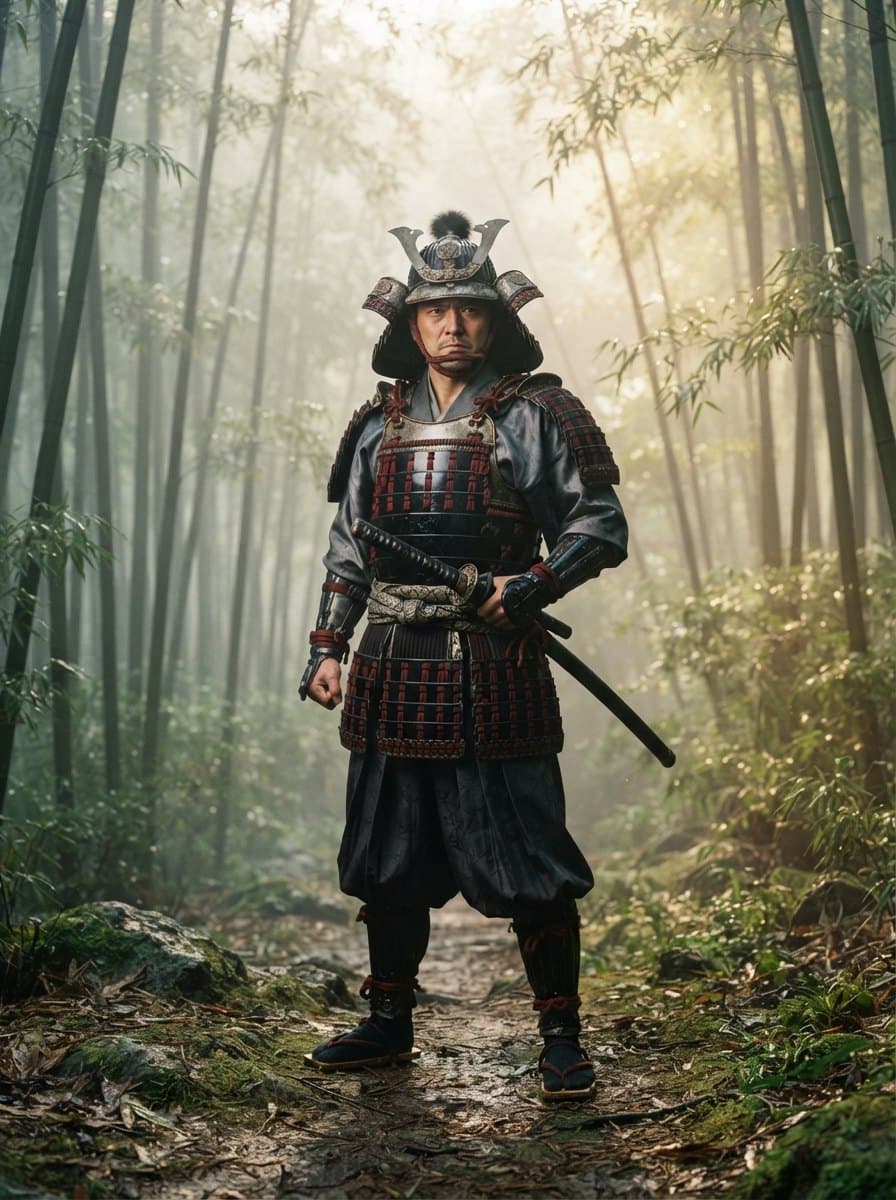
Samurai Costume
Embody the honor and discipline of Japan's legendary warrior class.
The samurai costume is a popular choice for historical reenactments, cosplay, and Halloween, representing the elite warrior class of pre-industrial Japan. This look combines traditional Japanese garments like the kimono and hakama with structured, layered plate armor. The final ensemble is commanding, detailed, and instantly recognizable by its iconic silhouette and swords.
- Difficulty
- Advanced
- Time
- ~60 min
- Budget
- $50–250
Try it on
See yourself as Samurai
One clear photo of yourself; we render you in this costume — face untouched, full body, about 20 seconds.
One render, $1. No account needed — if it fails you're not charged. Pricing.
Your photo is sent to Google's Gemini API to make the render and isn't used for training. Renders are AI-generated and labelled.
Want a different costume on this photo, or a whole group in costume? Open the Try-On Studio.
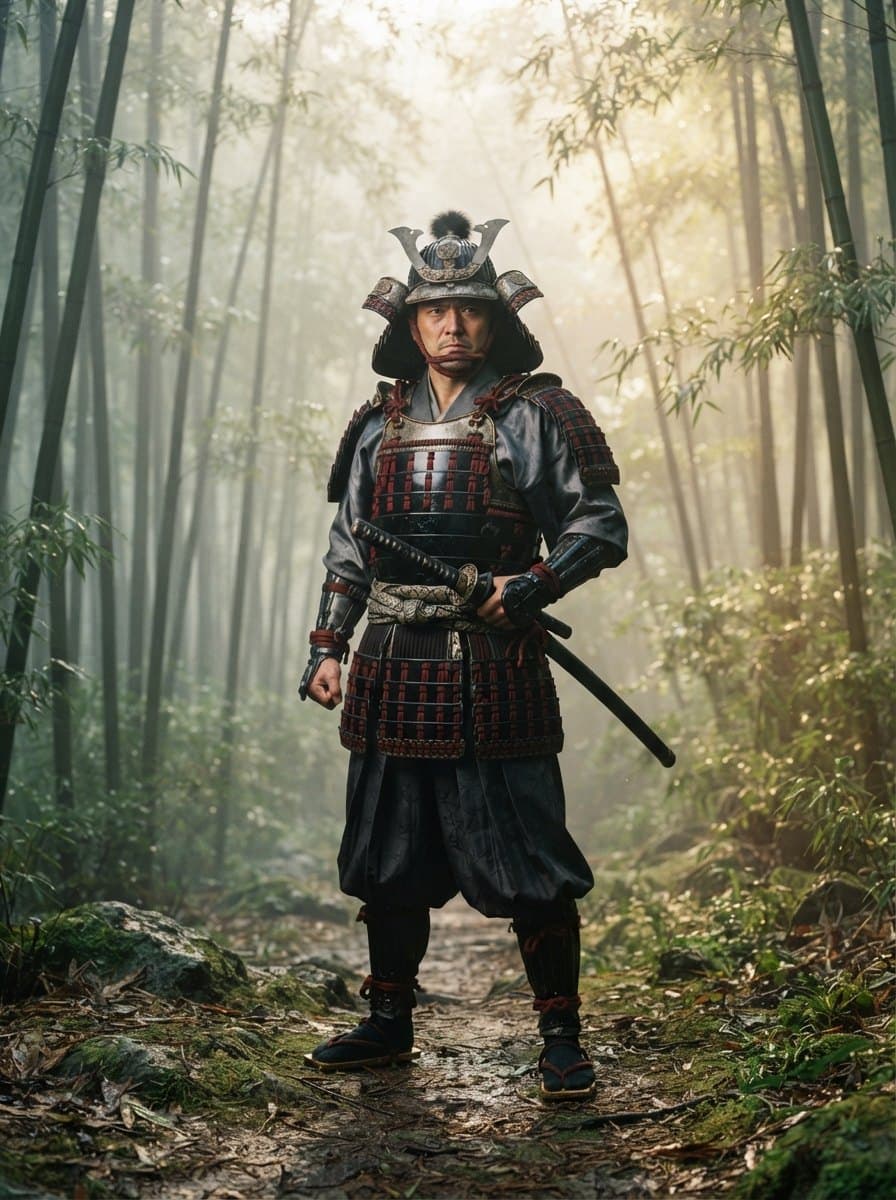
What you need for a Samurai costume
Short on time? Buy it ready-made
Spirit Halloween sells the complete Samurai costume — one box instead of 6 pieces.
Kimono Top (Kosode)
A solid black, dark blue, or red cotton wrap-around kimono top with wide sleeves.
DIY: Use a dark, solid-colored bathrobe or wrap shirt with wide sleeves.
Hakama Pants
Traditional wide-legged, pleated Japanese trousers, typically in black, navy, or grey.
DIY: Use extra-wide black palazzo pants or pleated trousers secured high at the waist.
Samurai Armor (Do and Kusazuri)
A chest plate and hanging skirt guards made of overlapping red or black lacquered plates laced together with thick cord.
DIY: Cut craft foam or cardboard into rectangular plates, paint them with glossy spray paint, and lace them together with paracord.
Sode (Shoulder Guards)
Matching rectangular shoulder plates attached to the chest armor.
DIY: Construct from painted craft foam and tie them to the shoulder straps of your chest plate.
Obi Belt
A wide fabric sash wrapped around the waist to secure the kimono and hold the swords.
DIY: Use a long strip of thick black or yellow fabric wrapped tightly around the waist.
Toy Katana and Scabbard
A curved Japanese sword with a wrapped hilt, tucked securely into the obi belt.
DIY: Cut a curved sword shape from thick cardboard, wrap the blade in silver duct tape, and wrap the handle in black ribbon.
Rather not assemble it? See ready-made Samurai costumes at Spirit Halloween ↗
How to put it together
- 1
Put on the kimono top, wrapping the left side over the right side, and secure it temporarily.
- 2
Step into the hakama pants, pulling them up over the lower half of the kimono top, and tie the long straps securely around your waist.
- 3
Wrap the wide obi belt over the hakama waist ties, knotting it firmly at the back or side.
- 4
Slip the chest plate (Do) over your head, adjusting the shoulder straps so the armor sits squarely on your chest.
- 5
Attach the shoulder guards (Sode) to the chest plate straps so they drape over your upper arms.
- 6
Slide the sheathed toy katana through the left side of your obi belt, keeping the blade edge facing upward.
- 7
Tie back your hair or put on a traditional samurai helmet (Kabuto) to complete the warrior silhouette.
Makeup & hair
Pull hair into a high, tight topknot (chonmage) or ponytail. Keep makeup minimal and natural, focusing on a clean, stern, and disciplined expression.
Samurai for couples, groups, kids & more
- couples
- Pair with a traditional Geisha or a fellow Samurai warrior in contrasting red and blue armor.
- group
- Assemble a squad of samurai in matching armor plates with different colored lacing.
- kids
- A simplified version with a printed samurai tunic, soft fabric armor, and a foam sword.
- Plus size
- Hakama pants are naturally loose and adjustable; choose a wrap-around kimono top with generous fabric for a comfortable fit.
- pet
- A lightweight fabric dog harness designed to look like red samurai plate armor.
Tips
- Secure your katana tightly in your belt so it doesn't slip or trip you up while walking.
- Wear comfortable black flats, sandals, or tabi socks with sandals to keep your feet comfortable.
- If making DIY armor, use hot glue to secure the lacing on the back of the foam plates so they don't shift.
- Keep your movements deliberate and posture upright to match the dignified presence of a warrior.
Samurai costume FAQ
- What is a samurai costume called?
- A traditional samurai outfit consists of a kimono, hakama (pleated trousers), an obi (belt), and armor called 'gusoku' or 'yoroi'.
- How do you secure the sword in the costume?
- The katana is tucked directly into the folds of the obi belt on the left side, with the curved blade facing upward, which is the historically accurate way to wear it.
- Is a samurai helmet necessary?
- No, a helmet (kabuto) is optional. Many samurai looks feature a traditional topknot hairstyle instead of a helmet.
Did you know? Historically, only samurai were permitted to carry the daisho (the pairing of a long katana and a shorter wakizashi sword), which served as a symbol of their elite social status.